Statement leading to lead magnet.

Industrial abseiling has emerged as the definitive solution for comprehensive facade assessments, enabling glazing specialists to reach areas that traditional access methods simply cannot.


Regular building inspections represent a critical component of responsible property management, yet accessing the exterior envelope of tall commercial structures presents significant challenges. Industrial abseiling has emerged as the definitive solution for comprehensive facade assessments, enabling glazing specialists to reach areas that traditional access methods simply cannot accommodate efficiently or safely.
Building owners and facility managers often struggle to implement thorough inspection programmes due to access constraints. Scaffolding erection for routine surveys proves prohibitively expensive and time-consuming, whilst mobile elevated work platforms face restrictions in urban environments where space, overhead obstructions, and ground conditions limit deployment.
These conventional approaches also create substantial disruption to building operations. Scaffolding occupies valuable ground-level space for extended periods, affecting pedestrian flow and business activities. The commercial rope access methodology eliminates these challenges entirely, allowing glazing inspections to proceed without impacting the daily functioning of the property.
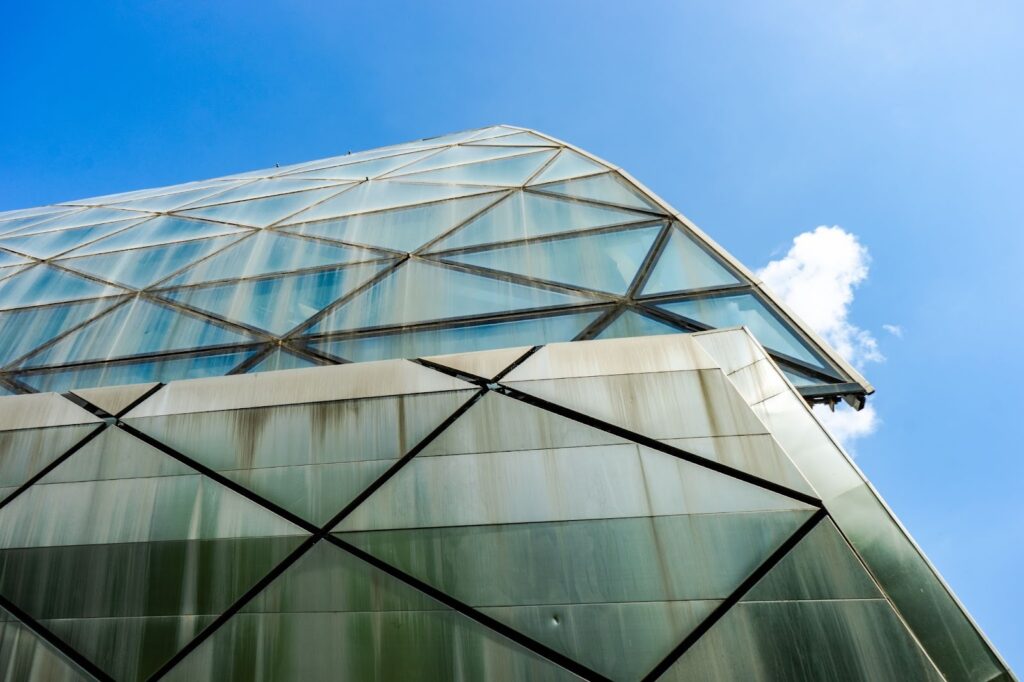
Industrial abseiling enables glazing specialists to conduct detailed examinations of every component within the building envelope. Technicians can position themselves directly adjacent to glazed panels, sealant joints, and cladding elements, facilitating close visual inspection that reveals issues invisible from ground level or through distant observation.
The rope access approach proves particularly valuable for curtain wall systems where hundreds of individual panels require assessment. Technicians systematically work across the facade, documenting the condition of each element. This thoroughness proves impossible to achieve through drone surveys or window cleaning inspections, which lack the proximity and time required for proper evaluation.
During rope access glazing inspections, technicians identify early-stage deterioration before minor issues escalate into expensive failures. Subtle seal degradation, microscopic cracks, gasket compression, and frame corrosion all become apparent through close examination. Early detection allows property managers to schedule remedial works proactively, avoiding emergency repairs and associated premium costs.
Professional industrial abseiling inspections generate comprehensive documentation that informs maintenance planning and capital budgeting. Technicians equipped with digital photography and standardised reporting systems create detailed condition records during facade access.
Modern rope access inspections typically produce:
This documentation proves invaluable for building owners seeking to understand their asset’s condition and plan maintenance expenditure strategically. The reports also demonstrate due diligence in building management, an increasingly important consideration given evolving building safety regulations.
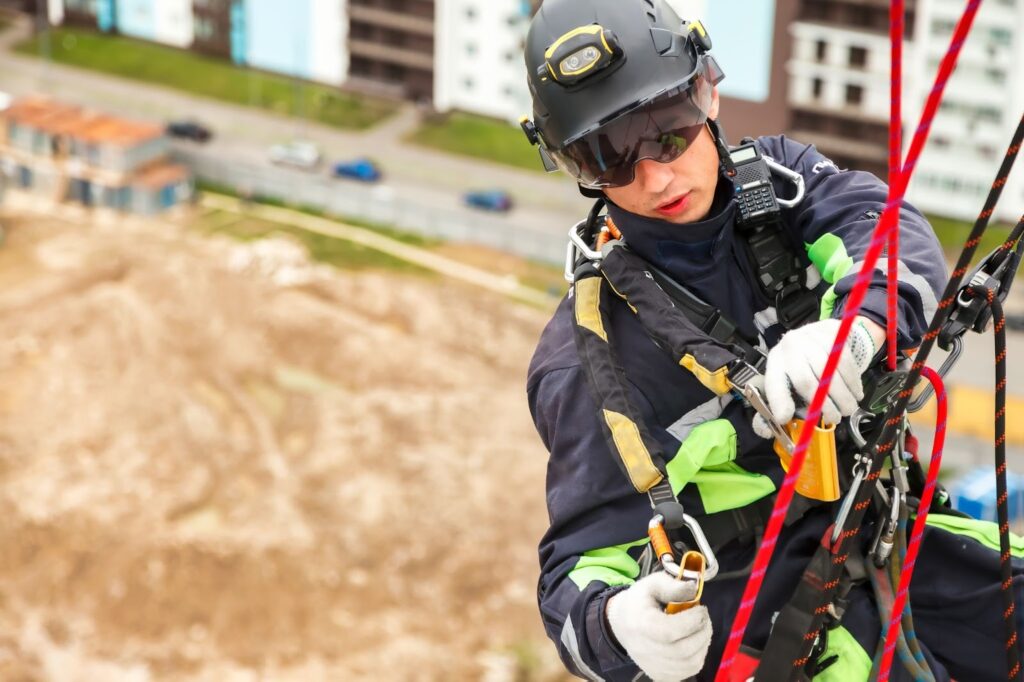
Glazing specialists employing commercial rope access can conduct investigations beyond visual assessment. Water testing identifies leak paths in problematic areas, whilst infrared thermography reveals thermal bridging and insulation deficiencies. These diagnostic techniques require technicians to position equipment precisely against the facade, something only rope access facilitates at height.
The flexibility of industrial abseiling allows inspectors to examine difficult areas that other methods miss entirely. Soffits, overhangs, recessed panels, and architectural features all receive thorough attention. Building corners and edges, often the first areas to experience weather-related deterioration, become readily accessible rather than problematic blind spots.
All rope access glazing inspections proceed under strict IRATA protocols ensuring technician safety and work quality. Level 3 supervisors design rigging systems specific to each building’s geometry and conduct comprehensive risk assessments before work commences. Every rope, anchor point, and connection undergoes rigorous inspection before and during operations.
The redundancy inherent in industrial abseiling systems, where technicians always maintain connection to both working and safety lines, provides security that other inspection methods cannot match. Ground marshals maintain exclusion zones protecting the public, whilst continuous communication systems keep teams coordinated throughout multi-level buildings.
The financial advantage of rope access inspections becomes apparent when comparing mobilisation costs and timeframes. A comprehensive facade survey via industrial abseiling typically completes in a fraction of the time required for scaffolding-based assessment, with corresponding cost reductions of 40 to 60 per cent.
This efficiency extends beyond direct costs. Buildings remain fully operational throughout inspection periods, eliminating lost revenue from inaccessible areas or disrupted tenancies. The minimal ground-level footprint means car parks, entrances, and pedestrian routes remain unaffected, maintaining the property’s functionality and appearance.
The intelligence gathered through professional glazing inspections informs strategic maintenance planning that extends asset life and controls costs. Rather than reacting to failures, building managers can schedule interventions during optimal weather windows and coordinate with tenant lease cycles or seasonal low-occupancy periods.
Regular inspection programmes, typically conducted biennially or triennially depending on building exposure and age, establish baseline conditions and track deterioration rates. This longitudinal data enables accurate forecasting of component replacement needs and capital expenditure planning, removing uncertainty from building management budgets.
Modern building stewardship demands proactive approaches to facade maintenance, and industrial abseiling provides the access solution that makes comprehensive inspection programmes practical and affordable. The combination of thoroughness, safety, cost-effectiveness, and minimal disruption establishes rope access as the industry standard for commercial building assessments, delivering the detailed intelligence property managers need to protect their investments and ensure occupant safety.
Protect your building investment with professional rope access inspections from GLRE’s IRATA-certified glazing specialists. Our comprehensive facade assessments identify issues before they become expensive failures, with detailed reporting that informs your maintenance strategy. Contact us today to schedule your building survey across Manchester and nationwide.



GLRE © All Rights Reserved 2026