Statement leading to lead magnet.

How often do eyebolts need inspecting? LOLER, BS 7883 and WAHR requirements explained. Book a compliant eyebolt inspection with GLRE Manchester today.

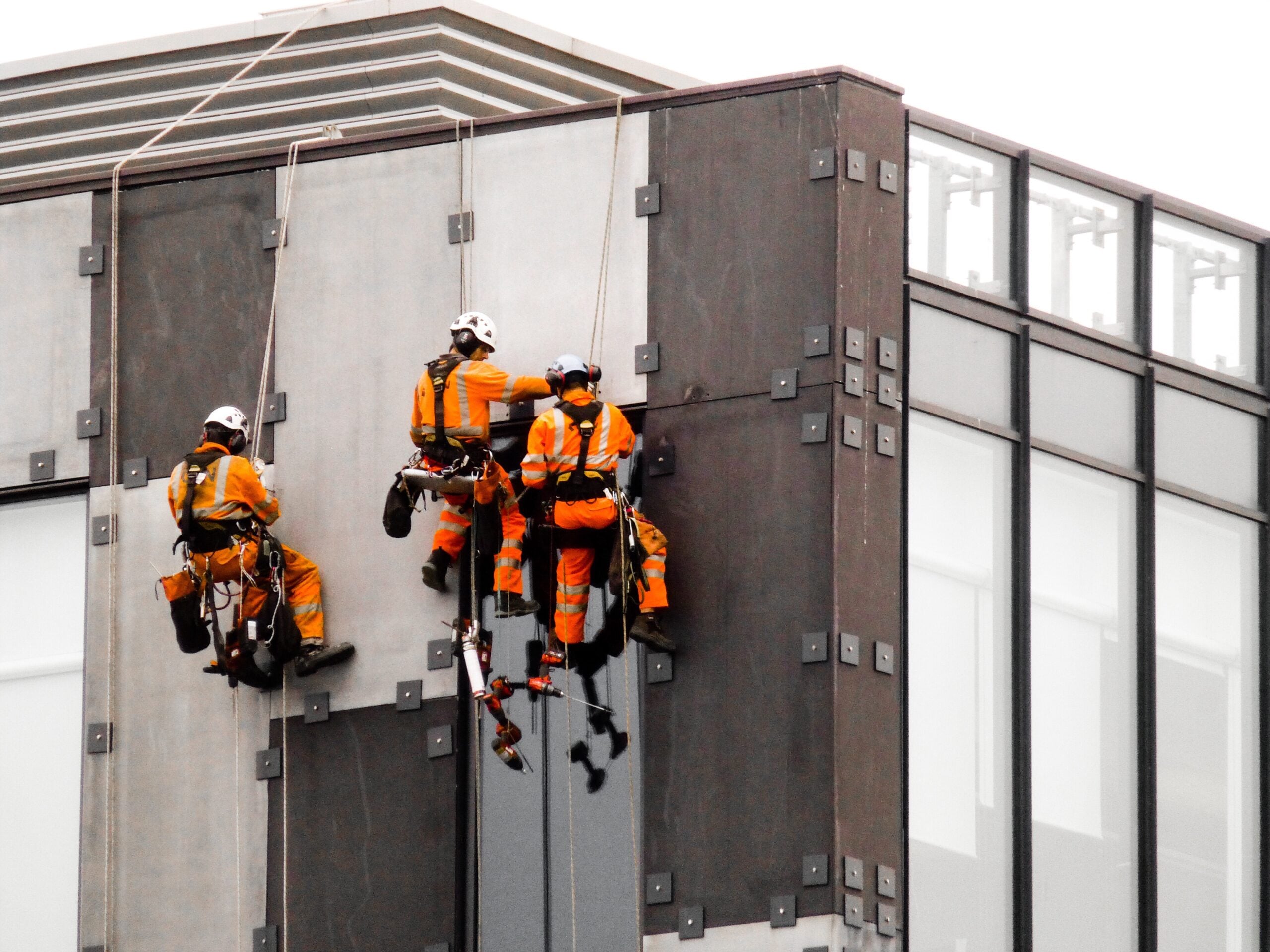
Eyebolts and structural anchor points used for working at height must be inspected at regular intervals by a competent person under UK law. The required frequency depends on the type of anchor and how it is used: standard eyebolts governed by BS 7883:2005 require examination at least every 12 months, while Class A1 anchor devices governed by BS EN 795 require inspection every 6 months. Eyebolts that are also classified as lifting accessories under the Lifting Operations and Lifting Equipment Regulations 1998 (LOLER) must be thoroughly examined at least every 6 months regardless of classification. GLRE Manchester provides eyebolt installation and testing services for commercial buildings across the UK, carried out by qualified engineers who reissue certificates on completion.
An eyebolt, in the context of working at height, is a fixed anchor point installed into a building structure to provide attachment for personal fall protection equipment, rope access systems, or other working-at-height arrangements. They are commonly installed on roofs, parapets, facades, and inside atriums or glazed structures where high-level access is required on a recurring basis.
Because eyebolts are the primary point of attachment between a person working at height and the building structure, their integrity is safety-critical. A failed anchor point in a fall arrest scenario removes the only protection a worker has. Regular inspection identifies corrosion, substrate damage, installation defects, and load-bearing degradation before they become a danger.
An eyebolt that has passed its inspection date is not safe to use. All eyebolts and anchor points in service should clearly display a current inspection certificate showing the date of the last examination and the date of the next scheduled inspection. If a certificate is absent, out of date, or damaged, the anchor point should be treated as unsafe until it has been tested and recertified by a qualified engineer.
Eyebolt inspection in the UK is governed by a combination of legislation and British Standards. The key frameworks are set out below.
The Work at Height Regulations 2005 (WAHR) place a duty on employers and building owners to ensure that all equipment used for working at height is suitable, properly installed, regularly inspected, and used only by competent and trained personnel. The regulations apply to any situation where a fall could cause personal injury, regardless of the height involved.
Under WAHR, all work at height systems and their components must be inspected by a competent person. The regulations do not themselves specify inspection frequencies for fixed anchor points, but they require that inspection programmes are in place and that records are maintained.
Where eyebolts are used as lifting accessories, whether for rope access or other load-bearing applications, they fall within the scope of LOLER. Under LOLER, lifting accessories including eyebolts must be thoroughly examined at least every 6 months by a competent person. A thorough examination under LOLER is a detailed, independent inspection; it is not the same as routine maintenance or a visual pre-use check.
LOLER requires that written reports of all thorough examinations are produced and retained. Records must be kept for a minimum of two years for most lifting equipment. Failure to produce examination records during an HSE inspection is treated as evidence of non-compliance regardless of whether examinations actually took place.
BS 7883:2005 is the British Standard governing the application, design, installation, and maintenance of anchor devices used for personal fall protection, including window cleaners’ eyebolts and similar Class A1 single anchor points. Under BS 7883:2005, anchor devices must be periodically examined at the intervals set out in the standard.
The standard requires eyebolt inspection at least every 12 months as a minimum. Inspections under BS 7883 go beyond a simple load test: the engineer must assess the anchor in its installed context, including the condition of the fixing substrate, the anchor’s position relative to the edge of the roof or working area, and whether the installation continues to meet the requirements for which it was originally designed.
BS EN 795 is the European standard covering the performance requirements and testing methods for anchor devices used in personal fall protection systems. Class A1 anchor devices, which are single permanent anchors fixed to vertical, horizontal, or inclined surfaces, are required to be inspected every 6 months under this standard.
The required inspection frequency for eyebolts and anchor points depends on their classification and how they are used. The table below summarises the key intervals applicable to commercial buildings in the UK.
| Anchor Type / Standard | Minimum Inspection Frequency | Regulatory / Standards Basis |
| Standard eyebolts (Class A1) | At least every 12 months | BS 7883:2005 |
| Class A1 anchor devices (fall protection) | Every 6 months | BS EN 795 |
| Eyebolts used as lifting accessories (rope access, LOLER scope) | Every 6 months | LOLER 1998 |
| All work at height equipment | As required by a competent person and in line with applicable standards | Work at Height Regulations 2005 |
These intervals are legal minimums. An anchor point that is heavily used, installed in a corrosive or exposed environment, or that has been subject to a fall arrest load, should be inspected sooner regardless of the scheduled date. Where a written scheme of examination exists, it may specify different intervals where justified by a competent person.
An eyebolt inspection by a qualified engineer is a detailed examination, not a simple visual check. The scope of what is assessed at each inspection has been clarified and extended by BS 7883:2005, which places a greater responsibility on the inspector to evaluate the anchor point in its installed context.
A thorough eyebolt inspection typically covers:
On completion of a satisfactory inspection, a new certificate is issued showing the date of examination and the date of the next scheduled inspection. Where a defect is identified, the anchor point is taken out of service and should not be used until the defect has been rectified and the point has been retested and recertified.
Eyebolt inspections must be carried out by a competent person. In the context of LOLER, a competent person is someone who has the necessary practical and theoretical knowledge and experience to carry out a thorough examination safely and effectively. This is not a self-declared standard; the competency must be demonstrable.
For eyebolts installed on buildings where rope access is used as the primary means of access, the inspector should hold appropriate rope access qualifications in addition to eyebolt inspection competencies. GLRE Manchester’s qualified engineers hold the relevant training and experience to inspect, test and recertify eyebolt systems, and carry out all inspections in line with BS 7883:2005, BS EN 795, and LOLER requirements.
Failure to maintain a valid inspection programme for eyebolts and anchor points used in working-at-height systems is a breach of UK health and safety law. The consequences fall into two broad categories: safety risk and legal liability.
An eyebolt that has not been inspected within the required period may have developed corrosion, substrate deterioration, or installation defects that compromise its ability to hold a fall arrest load. The consequence of anchor failure during a fall arrest is severe. Because anchor points are often installed in locations that are not routinely visible or accessible, deterioration can progress undetected without a formal inspection programme.
Building owners, employers, and facilities managers are duty holders under the Work at Height Regulations 2005 and LOLER. If an anchor point fails and a person is injured, the absence of a valid inspection record will form part of any HSE investigation and any subsequent prosecution or civil claim. HSE enforcement records show that duty holders have been prosecuted and fined following incidents where equipment was not maintained or inspected in line with legal requirements.
For building owners who use contractors for high-level access work, the duty to ensure that anchor points are safe and in-certificate rests with the building owner as well as with the contractor using the equipment. Providing access to out-of-date anchor points to working-at-height contractors is itself a compliance failure.
New eyebolts should be installed when existing anchor points have failed inspection and cannot be remediated, when a building has no existing permanent anchor provision, when a planned maintenance or refurbishment programme requires safe high-level access and no suitable anchors exist, or when an inspection report recommends relocation of anchor points to improve coverage or user safety.
All new eyebolt installations by GLRE are resin-anchored steel eyebolts, installed at height by our IRATA-qualified rope access technicians. Each installation is tested to comply with the applicable BS and EN standards and fully certificated on completion. For buildings where an eyebolt system alone is not sufficient, we also install man-safe latchway systems, mobile fall restraint anchor points, and temporary or fixed edge protection.
For buildings where access for the installation itself is challenging, our rope access and industrial abseiling service allows our teams to install anchor points at any height without scaffolding.
The simplest check is to locate the inspection certificates for all eyebolts and anchor points on your building and confirm that none have passed their expiry date. Certificates should be displayed at or near each anchor point or held in a building access log.
If you are unsure whether your building has a complete register of anchor points, whether all points have current certificates, or whether the installed system is appropriate for the access requirements of the building, a site survey by a qualified inspector will provide a complete picture. GLRE Manchester can carry out an anchor point survey, identify any that are out of service or missing certification, and provide a programme of inspection, testing and where necessary replacement to bring the system back into compliance.
If your eyebolts or anchor points are due for inspection or you are unsure whether your building’s fall protection system is compliant, our team can arrange a site survey and inspection programme. Contact GLRE Manchester to discuss your requirements.



GLRE © All Rights Reserved 2026