Statement leading to lead magnet.

Leaks, cracked panels, failed seals: expert guide to atrium glazing repair faults and fixes. IRATA-qualified teams. Book a free survey with GLRE Manchester.

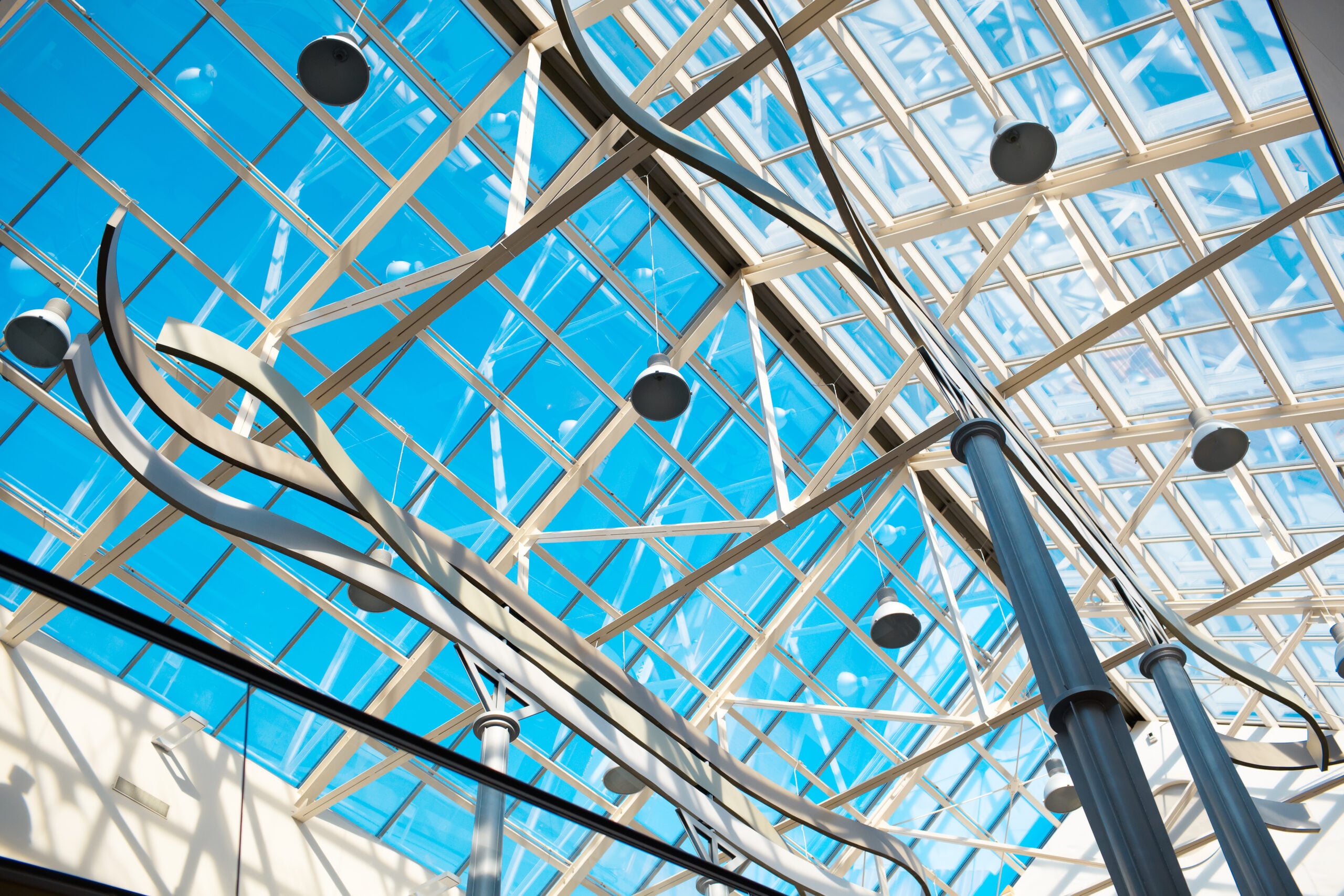
The most common faults in commercial atrium glazing are water ingress through failed seals or blocked drainage, cracked or broken glass panels, deteriorating silicone joints, and structural movement causing frame distortion. Atrium glazing repair is a specialist activity because the overhead and steeply-raked nature of most atrium structures makes safe access difficult, and because identifying the true root cause of a leak or fault requires a methodical inspection approach rather than a surface-level assessment. GLRE Manchester has carried out atrium glazing repairs on some of the UK’s largest and most complex commercial glazing structures, including shopping centres, NHS facilities and corporate headquarters.
An atrium is an internal or partially internal space within a building that is covered or enclosed by a glazed structure, typically overhead or at a steep angle. Atrium glazing systems use specialist glass and framing components designed to handle the loads, thermal movement and drainage demands placed on roof-level and overhead glazing.
Common atrium glazing systems in UK commercial buildings include:
Each system has its own characteristic failure modes, which is why a thorough inspection by an experienced glazing specialist is an essential first step before any repair work is specified.
Atrium glazing faults tend to fall into a small number of categories. Understanding what causes each fault helps building managers identify problems early and prioritise repair work appropriately. The table below sets out the most frequently encountered problems in commercial atrium glazing repair, their typical causes, and the resolution approach used by specialist contractors.
| Common Problem | Typical Cause | Resolution Approach |
|---|---|---|
| Water ingress / leaking | Failed sealant joints, cracked glass, blocked drainage | Root-cause leak investigation, targeted sealant and glazing repairs |
| Cracked or broken glass panels | Impact, thermal stress, spontaneous toughened glass breakage | Like-for-like or upgraded glass replacement via rope access or MEWP |
| Condensation between double-glazed units | Failed edge seal allowing moisture entry | Replacement of the affected sealed unit |
| Corroded or failing framing | Age, water ingress, environmental exposure | Frame repair or replacement as part of a refurbishment programme |
| Algae and soiling on overhead glass | Lack of regular maintenance access | High-level cleaning followed by a planned maintenance programme |
| Loose or failed structural fixings | Age, overloading, original installation defects | Specialist inspection and structural re-fixing or system upgrade |
Leaks are the most frequently reported problem with atrium glazing and also the most commonly misdiagnosed. A leak presenting at a particular point inside a building will not always originate at the point directly above. Water can travel considerable distances along glazing bars, channels or structural elements before finding a path inward.
Common causes of atrium glazing leaks include:
A surface repair to the most visible sealant without investigating drainage and flashing conditions will frequently fail to resolve the leak. GLRE identifies and addresses all contributory causes before carrying out any repair work, and backs completed leak repairs with an insurance-backed warranty.
Glass panels in atrium structures can crack or break as a result of impact damage, thermal stress, frame movement, or manufacturing defects. Because atrium glazing is typically overhead or steeply raked, a cracked panel represents a safety risk as well as a weather protection issue.
Depending on the specification of the glass and the type of breakage, a cracked panel may remain in place for a period without immediate risk of collapse, but it should be assessed promptly. Laminated glass, commonly used in overhead applications for safety reasons, is designed to remain in position after breakage due to the interlayer bonding the fragments together.
Replacement of broken atrium glass panels requires careful removal of the damaged panel while suspended at height, followed by procurement and installation of a replacement to the correct specification. High-level glass replacement via rope access is the standard approach for overhead atrium work where access platforms are impractical.
The silicone sealant joints in an atrium glazing system serve both a weatherproofing and, in structural silicone systems, a structural function. Over time, silicone degrades through UV exposure, thermal cycling and physical movement, eventually losing its adhesion and flexibility.
Signs of silicone joint failure include visible cracking or splitting along joint lines, separation of the sealant from the glass or frame substrate, discolouration, and in some cases visible mould growth within deteriorating joint material.
Repair involves removing the failed sealant material in full, preparing the substrate surfaces, and applying new sealant to the correct specification and thickness. For structural silicone systems this work must be carried out by a contractor with the appropriate experience, as incorrect joint geometry or sealant specification can compromise the structural integrity of the glazing.
Where atrium glazing uses double-glazed sealed units rather than single glass, hermetic seal failure causes condensation to form between the panes. This presents as persistent misting or fogging that cannot be removed by cleaning. A failed double-glazed unit will not recover and must be replaced.
For atrium applications, replacement units typically need to be manufactured to a bespoke specification matching the original glass dimensions, solar control coating, and safety classification. Standard replacement units produced for vertical glazing applications may not meet the requirements of an overhead or steeply-raked installation.
Commercial buildings move over time due to settlement, thermal expansion and contraction, and in some cases changes to the loading of the structure. This movement can distort glazing frames and bars, causing glass panels to bear unevenly on their supports, drainage channels to fall out of level, and sealant joints to open up or compress beyond their design range.
Where frame distortion is identified, a repair programme needs to address the glazing and the frame condition together. In some cases, this will require liaison with a structural engineer before glazing repairs can be finalised.
The decision between repair and replacement depends on the nature and scale of the defects, the age of the glazing system, and whether spare parts are still available for the existing installation.
Repair is typically the right course of action where:
A refurbishment or full replacement programme becomes the appropriate response where:
A condition survey by a specialist commercial glazing contractor is the most reliable way to establish which route is ap
The repair process for atrium glazing follows a structured sequence designed to identify all faults accurately before any remedial work is specified. This approach is what allows GLRE to offer insurance-backed warranties on leak repair projects rather than surface-level fixes that may recur.
A thorough inspection is carried out by an IRATA Level 3 supervisor from rope access, allowing every area of the atrium structure to be examined directly rather than from ground level or an adjacent platform. The inspection covers glass panels, sealant joints, drainage channels, flashings, cappings, fixings and frame condition throughout the structure.
Where leaks are present, the inspection traces all possible water entry and travel paths rather than simply identifying the most visible wet area. A written inspection report is produced, documenting all faults found and their likely causes.
Based on the inspection findings, a schedule of repair works is produced. This sets out exactly what work is required, in what sequence, and to what specification. Where glass replacement is needed, the specification includes the glass type, thickness, safety classification and any coating requirements.
All atrium glazing repair work requires a detailed risk assessment and method statement before work begins. Given the overhead working environment and the proximity to occupied building areas, the safe working plan will address how the work area below the atrium is managed, what protection is provided against debris or falling materials, and how access is controlled during the works.
Repair works are carried out by IRATA-qualified rope access technicians working under the continuous supervision of a Level 3 supervisor. The specific works depend on the fault types identified, but typically include sealant removal and replacement, drainage clearance, flashing repair or replacement, glass panel removal and installation, and frame cleaning and treatment.
Where leak repairs have been carried out, a water test is conducted to verify that the identified ingress points have been resolved. The Level 3 supervisor signs off all completed works and the full project documentation is retained and provided to the client.

Atrium glazing sits overhead by definition, meaning all repair and replacement works require working at height above the atrium floor. In a busy commercial building, the atrium is often a live circulation or trading area that cannot be closed for extended periods.
Access methods used for atrium glazing repair include:
The access strategy is determined at the initial site survey stage and is costed as part of the works specification from the outset.
Glass used in overhead glazing must comply with BS EN 12600, the UK standard for glazing impact performance. Overhead glazing in positions where breakage could result in glass falling on occupants must be specified as laminated safety glass so that broken panels remain in place rather than falling.
The Health and Safety at Work etc. Act 1974 and the Work at Height Regulations 2005 govern all work carried out on glazed atriums. Compliance requires that a competent person plans and supervises the works, that appropriate fall-prevention measures are in place, and that the correct personal protective equipment is used throughout.
The Work at Height Regulations 2005 require that all work at height is properly planned, appropriately supervised, and carried out by competent people. IRATA accreditation provides the recognised framework for rope access works in compliance with these requirements.
For more information on Atrium Glazing Safety Standards & Inspections see our post Atrium Glazing Safety: Standards & Inspections.
| Fault Type | Likely Cause | Repair Approach |
| Water ingress / leak | Failed sealant, blocked drainage, damaged flashings | Full root cause investigation, targeted repair of all contributory factors |
| Cracked or broken glass | Impact damage, thermal stress, frame movement | Panel removal and replacement via rope access to original or upgraded specification |
| Failed silicone joints | UV degradation, thermal cycling, age | Full removal of failed sealant and replacement to correct specification |
| Misted double-glazed units | Hermetic seal failure | Replacement of affected units to matching specification |
| Frame distortion | Structural movement, corrosion, settlement | Frame assessment, remedial frame works, re-glazing as required |
| Blocked drainage channels | Debris accumulation, collapsed components | Clearance, flush testing, repair or replacement of drainage components |
Atrium glazing should be inspected on a planned basis rather than only in response to visible problems. Overhead and steeply-raked glazing is more exposed to weathering and loading than vertical glazing and tends to develop faults that are not visible from ground level until they have progressed significantly.
Circumstances that should prompt an inspection include:
An inspection by rope access gives a direct, close-range view of every component of the structure that cannot be replicated from ground level or from a cherry picker positioned at building perimeter. Early identification of deteriorating sealant or blocked drainage allows repair work to be carried out before a leak develops, which is significantly less disruptive and less costly than responding to an active ingress problem.
Yes, in most cases. One of the practical advantages of rope access over scaffolding or access platforms for atrium repair work is that the ground-level footprint of the operation is limited to the area directly below the work zone, which can be cordoned off and managed while the rest of the building continues to operate.
For shopping centres, hospitals, offices and other continuously occupied commercial buildings, the ability to complete repair work without closing the building or large sections of it is a significant operational consideration. Our project managers work with facilities teams to schedule works to minimise disruption, including out-of-hours working where required.
GLRE has experience delivering atrium repair projects across a range of occupied building types, including NHS facilities, shopping centres and corporate campuses. Our completed projects are available to review on our projects page.
GLRE has nearly 30 years of experience carrying out high-level commercial glazing repairs across the UK, including atrium glazing repair and leak resolution at some of the country’s most well-known buildings. The team holds CHAS Elite, Constructionline Platinum, ISO 9001, ISO 14001, Safecontractor, and Acclaim accreditations.
GLRE is one of a small number of commercial glazing contractors able to provide insurance-backed guarantees on leak repair projects, reflecting the confidence the team has in its permanent, root-cause approach to water ingress resolution.
GLRE’s IRATA-trained rope access technicians hold all necessary qualifications in HS&E law and practice, including NEBOSH, IOSH, and trade-specific certificates, and operate under the oversight of Level 3 supervisors in accordance with IRATA international guidelines.
If your atrium glazing has developed a fault or has not been inspected recently, our team can arrange a no-obligation site survey. Contact GLRE Manchester to discuss your requirements.



GLRE © All Rights Reserved 2026