Statement leading to lead magnet.

Expert guide to high-rise glass replacement via rope access. Process, costs and timescales explained. Get a free site survey from GLRE Manchester today.

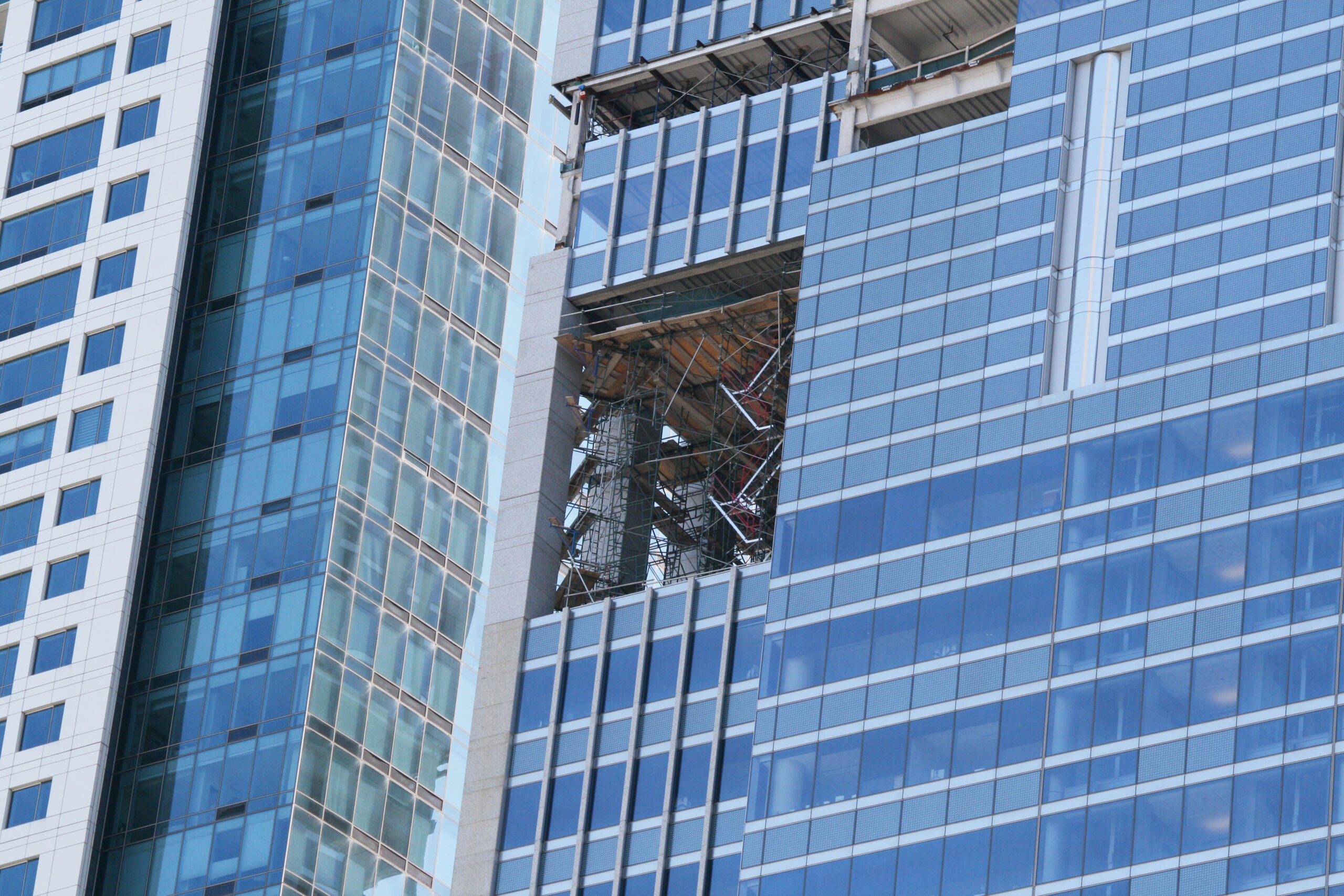
High-rise glass replacement involves removing and installing glazing panels on commercial buildings at height, typically using rope access or industrial abseiling techniques rather than scaffolding or mobile elevated work platforms. The process covers everything from initial assessment and glass specification through to panel removal, installation, and sign-off. Timescales and costs vary depending on the size and specification of the glazing, the height and accessibility of the building, and how many panels require attention.
High-rise glass replacement is the process of safely removing damaged, failed or end-of-life glazing panels from commercial buildings at height and fitting new glass in their place. It is a specialist activity that requires both rope access expertise and glazing knowledge, since technicians must handle and install glass safely while suspended at height.
Buildings commonly requiring this service include offices with curtain wall systems, shopping centres with glazed atria or canopies, NHS and public sector facilities, industrial buildings with high-level rooflights or facade glazing, and multi-storey residential developments with communal glazed elements.
The triggers for high-level glass replacement typically fall into one of four categories:
A high-rise glass replacement project follows a structured sequence of steps. Understanding what each stage involves helps building owners and facilities managers plan effectively and avoid unnecessary delays.
Before any work is priced or planned, a site survey is carried out by a qualified rope access supervisor. The survey establishes the height and location of the affected panels, the type and specification of the existing glazing, the available anchor points or man-safe systems on the building, and any access constraints such as proximity to public areas or operational building zones.
The survey also determines whether the existing framing is suitable to accept new glass or whether any remedial frame work is required before replacement can proceed. At GLRE, site surveys are provided at no charge.
Once the survey is complete, replacement glass is specified. For standard float glass or basic double-glazed units this is relatively straightforward. For more complex specifications, including toughened glass, laminated glass, solar control glass or bespoke-sized units for curtain wall systems, lead times can extend the overall project timeline.
The specification will be driven by the original building design, current building regulations, and in some cases the requirements of the building owner or their insurer. Our team can advise on appropriate glass specifications where the original documentation is unavailable.
Before mobilising to site, a full risk assessment and method statement (RAMS) is prepared. This document sets out every hazard associated with the work, the control measures in place, the equipment to be used, the qualifications of the team, and the emergency procedures in the event of an incident. RAMS documentation is provided to clients as standard and forms part of the project file.
On the day of work, the IRATA Level 3 supervisor designs the rope rig configuration for the specific location and task. Working and safety lines are installed and inspected, the work area is cordoned off with hard barriers and signage, and ground marshals are positioned where required. Every technician self-inspects their own harness and connections before the work begins.
The damaged or failed glazing is carefully removed while technicians are suspended on rope access equipment. Where glass is broken or fragile, this stage requires particular care to prevent further breakage and to manage debris safely. Broken glass is collected and removed from the work area rather than dropped or left in situ.
With the old glass removed, the frame is inspected and prepared. This includes checking glazing channels, rebates and fixings, replacing any failed or corroded components, and cleaning the frame surfaces before new glass is fitted. The replacement panel is then installed, sealed and checked for fit and security.
For curtain wall systems or structural glazing, this stage may also involve re-applying silicone structural sealant, which requires appropriate curing time before the installation is signed off as complete.
Once work is complete, the Level 3 supervisor signs off the installation and the work area is cleared. All documentation relating to the project, including the risk assessment, glass specification, and completion record, is retained by GLRE and provided to the client on request.
The cost of high-level glass replacement varies considerably depending on the specifics of the project. The factors that most commonly affect price are set out below.
| Cost Factor | Why It Affects Price |
| Number of panels | More panels means more access time, glass procurement and labour |
| Height of building | Greater height increases rig complexity and setup time |
| Glass specification | Toughened, laminated, solar control or bespoke units cost more to procure than standard float glass |
| Access constraints | Busy city centre locations, occupied buildings or restricted anchor points may require additional planning and time on site |
| Frame condition | Corroded or damaged frames may require preparation work before glass can be installed |
| Urgency | Emergency or out-of-hours attendance will typically carry a premium over planned scheduled work |
We do not publish fixed pricing for high-level glass replacement because every project is different. The most reliable way to obtain an accurate cost is through a site survey, which allows us to assess all of the relevant variables before quoting.
Timescales depend on the number of panels, the complexity of access, and how quickly replacement glass can be procured. As a general guide:
Glass procurement is often the main variable affecting overall project timescale. Standard sizes and specifications can generally be sourced quickly, while bespoke units for curtain wall systems may require several weeks of lead time. We advise clients to initiate the process as soon as a glazing issue is identified to minimise any delay.
Rope access is the method of choice for high-level glazing replacement on commercial buildings for several practical reasons. It removes the need to erect scaffolding, which takes time, requires permits in some locations, and can obstruct building access or pavement use for an extended period. A rope access team can typically mobilise more quickly and complete the work within a shorter overall timeframe.
For occupied buildings, the lower footprint of rope access works is a significant advantage. The work area at ground level is limited to the cordon directly below the point of work, rather than the extensive ground-level disruption associated with scaffolding frames and ties.
From a safety perspective, rope access conducted by IRATA-qualified technicians follows a rigorously defined set of protocols. Every working session is supervised by a Level 3 IRATA supervisor, and all equipment is inspected before each shift and after every break.
Our rope access glazing teams are experienced with a wide range of commercial glazing systems. The types of glazing most commonly replaced via rope access include:
If you are unsure whether your specific glazing system can be addressed via rope access, our survey team can advise following an initial site assessment.
Whether glazing replacement is covered by a building’s insurance policy depends on the cause of the damage, the terms of the policy, and the nature of the building ownership or lease arrangement. Impact damage caused by a third party or an unforeseen event is commonly covered. Gradual deterioration or seal failure in double-glazed units is less commonly covered as standard.
We are not insurance advisers and cannot confirm whether a specific claim will be accepted. However, we can provide detailed documentation following a site survey, including photographs, condition reports and quotations, which insurers and loss adjusters typically require as part of the claims process.
GLRE is one of a small number of rope access companies able to provide insurance-backed guarantees on completed works, which can be relevant where insurers or building warranties require this.
When selecting a contractor for high-rise glass replacement, it is worth verifying the following before committing to a quotation:
GLRE holds IRATA membership, ISO 9001, CHAS Elite, SafeContractor, and Constructionline Platinum accreditation. We are also a veteran-owned and carbon neutral business. Full credentials are available to verify through the relevant accreditation bodies.
If you have a high-level glazing issue that needs attention, our team is ready to help with a no-obligation site survey. Contact GLRE Manchester to discuss your requirements and arrange an assessment.



GLRE © All Rights Reserved 2026