Statement leading to lead magnet.

GLRE specialises in commercial window replacement via rope access. Fast mobilisation, no scaffolding required. Get a free site survey today.

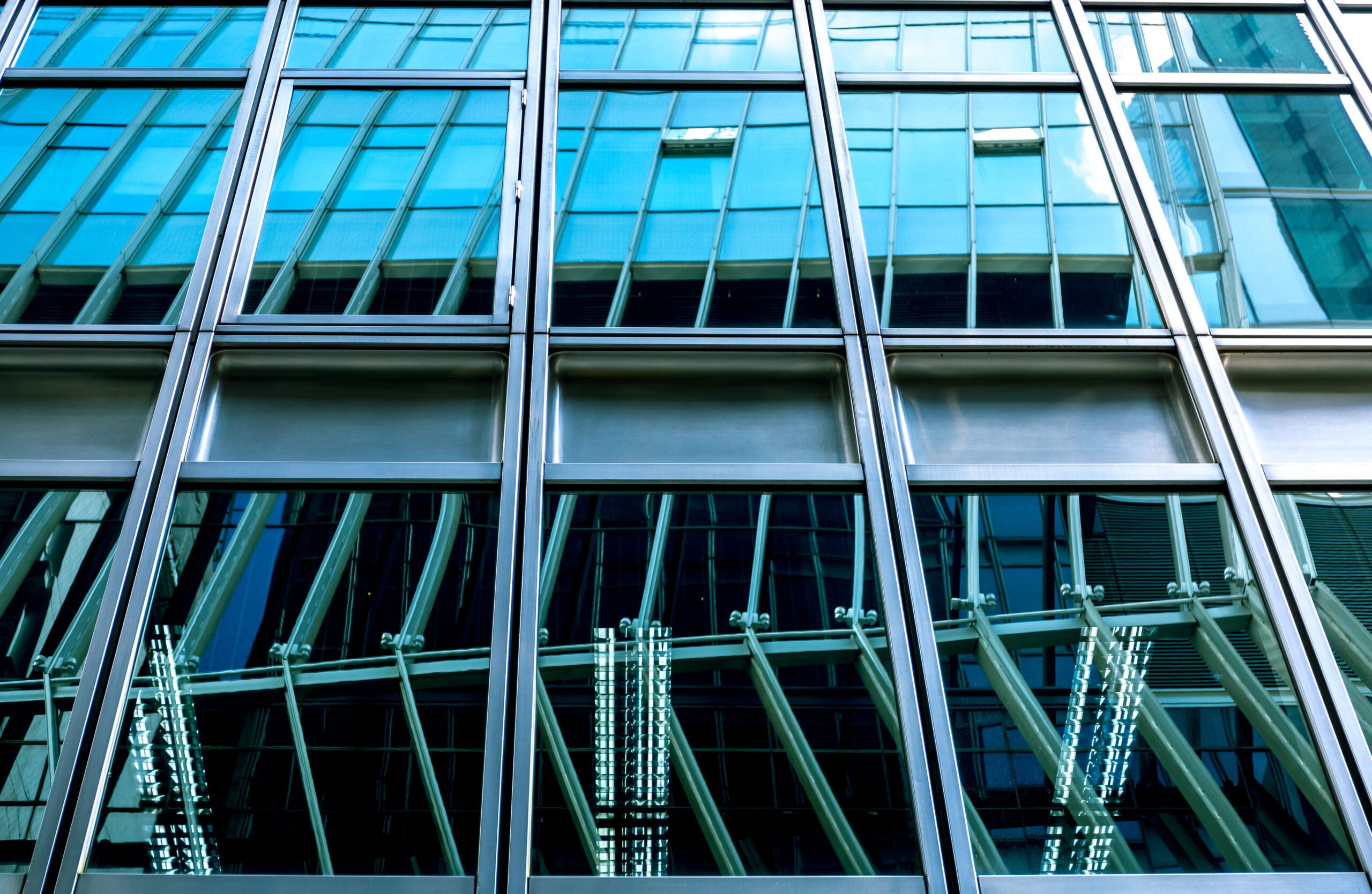
Commercial window replacement via rope access is the process of removing and replacing failed, damaged, or thermally inefficient glazing on commercial buildings using IRATA-qualified rope access technicians rather than scaffolding or elevated work platforms. For most targeted glass replacement jobs on high-rise or multi-storey commercial buildings, rope access is faster to mobilise, causes less disruption to occupants and the surrounding area, and avoids the cost of erecting a full scaffold structure.
Commercial window replacement refers to the removal and installation of glazing units in commercial buildings. This includes individual pane replacement following damage or breakage, full unit replacement where frames or fixings have deteriorated, and replacement as part of a planned thermal upgrade programme.
The term covers a range of glazing systems found on commercial buildings, including curtain wall systems, stick glazing, unitised facades, structural glazing, and conventionally framed commercial windows. Each system has different replacement considerations in terms of access, component specification, and how the new glass is handled and installed at height.
Commercial glazing does not last indefinitely, and a number of conditions can make replacement necessary. The most common triggers are:
Rope access commercial glass replacement is carried out by a team of IRATA-qualified technicians working from ropes rigged from anchor points on or above the roof level of the building. The process follows a structured sequence on every project.
Before any work begins, an IRATA Level 3 supervisor or experienced project manager conducts a site survey. This involves assessing the condition of the glazing to be replaced, identifying suitable anchor points for the rope rig, determining how the replacement glass will be lifted and manoeuvred to height, and establishing the correct specification for the replacement units.
A detailed risk assessment and method statement is prepared prior to mobilisation. This covers all aspects of the work including glass handling at height, waste disposal, ground-level safety, and any specific site constraints such as footfall, adjacent building uses, or restricted working hours.
Replacement glass is ordered to the correct specification for the existing glazing system. For sealed unit replacements this includes the correct overall dimensions, unit thickness, glass specification, and any edge or finish requirements. Lead times vary depending on the specification and the supplier, and this is one of the primary factors affecting overall project timescale.
On the day of works, the rope access team sets up the rig from roof level, installs ground-level safety barriers and signage, and deploys any glass handling equipment required. For high-rise commercial glass replacement, this may include vacuum lifters and specialist rigging to control the glass during installation.
The failed or damaged glass is carefully removed and lowered to ground level for disposal. The replacement unit is then lifted, positioned, and installed by the rope access team, with all fixings, gaskets, and sealant applied to the correct specification. The level 3 supervisor oversees the work throughout and verifies the completed installation before the team stands down.

Timescales for commercial glass replacement projects depend on several variables. A single pane replacement on an accessible building can sometimes be completed in a single day, including rig setup and ground-level safety measures. Larger programmes involving multiple units or more complex glazing systems will take longer.
The main factors affecting timescale are:
For emergency make-safe situations, GLRE can attend at short notice to secure glazing and prevent further risk, with permanent replacement scheduled once the replacement glass has been procured. This two-stage approach is common for high-rise glass repair situations where the safety risk needs to be addressed immediately.
The cost of commercial window replacement via rope access varies significantly depending on the scope of work, the glazing specification, the height and access complexity of the building, and whether the project is a single-unit repair or a larger planned replacement programme.
It is not possible to provide meaningful cost guidance without a site survey and an understanding of the glazing specification required. GLRE offers a free site survey for commercial projects, which allows an accurate scope and cost to be established before any commitment is made.
As a general principle, rope access mobilisation tends to be more cost-effective than erecting full scaffolding for targeted, localised replacements. For large-scale replacement programmes involving extended periods of facade access, the relative cost position of different access methods should be assessed on a project-by-project basis.
| Factor | Rope Access | Scaffolding |
| Mobilisation speed | Typically fast, often within days | Longer lead time for erection |
| Disruption to site | Minimal footprint, targeted access | Larger footprint, extended presence |
| Cost for localised work | Generally more cost-effective | Higher fixed costs for erection and dismantling |
| Suitability for complex geometry | High: technicians access most areas | Limited by scaffold design |
| Suitability for extended programmes | Assessed per project | Can be cost-effective for prolonged facade access |
| Safety standards | IRATA standards and Level 3 supervision | Independent scaffolding standards apply |
High-rise glass replacement introduces additional planning and logistical requirements that do not apply to lower-level work. These include:
GLRE has experience of high level glass replacement on a wide range of commercial building types, including office buildings, shopping centres, hospitals, and transport infrastructure.
Rope access technicians can carry out commercial glass replacement on most glazing systems found on commercial buildings. These include:
Where glazing is part of a larger building envelope repair scope, GLRE can address associated defects such as failed sealant lines, cladding damage, and mastic joint failures in the same mobilisation, reducing overall project cost and disruption.
When carrying out commercial glass replacement, it is common to identify related defects in the surrounding fabric. GLRE’s teams are trained to spot and report issues including failed mastic and sealant joints, cladding defects, and issues with flashings or drainage details. Addressing these at the same time as the glass replacement avoids the need for a return visit and reduces overall disruption.
For buildings where the condition of the wider facade is unknown, a health and safety dilapidations report can provide a documented assessment of all defects identified, which supports planned maintenance budgeting and prioritisation.
To discuss a commercial window replacement project or arrange a free site survey, contact the GLRE team today and speak to an IRATA-qualified specialist.



GLRE © All Rights Reserved 2026