Statement leading to lead magnet.
GLRE explains how leak investigation works on commercial buildings, from rope access inspection to water testing and targeted repair. Contact us for a survey.

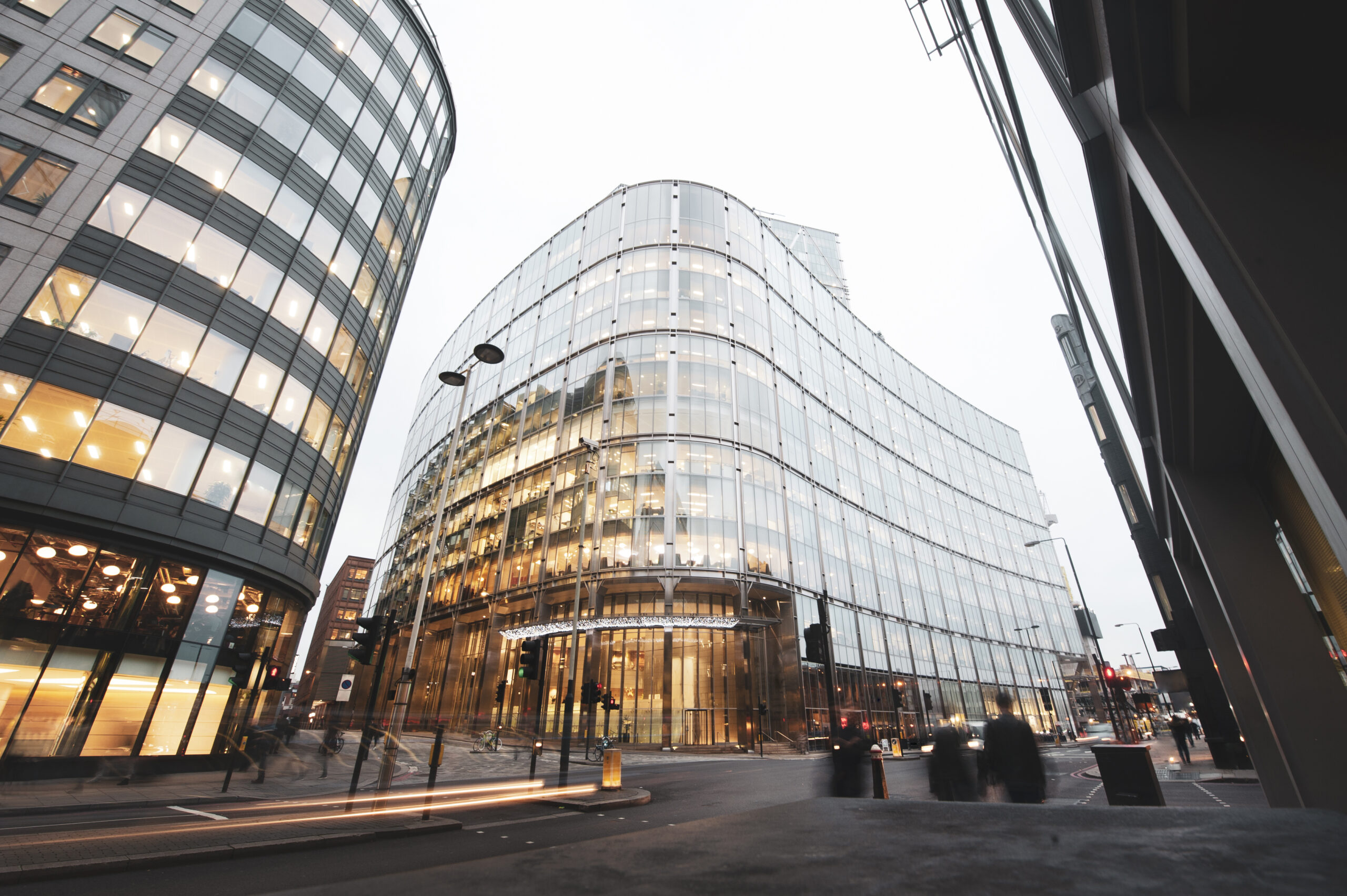
Water ingress is one of the most common and most damaging problems affecting commercial buildings. Unlike a straightforward roof leak that announces itself directly above the point of failure, leaks on tall or complex buildings often travel considerable distances before they become visible internally, making the source extremely difficult to identify without a systematic investigation.
Leaks at height occur for a number of reasons. Sealant joints between glazing panels and at curtain wall interfaces degrade through UV exposure and thermal cycling, eventually losing their watertight function. Glazing gaskets harden and crack with age. Cladding fixings corrode and allow water behind the panel. Flashing details around window heads and sills fail. Structural movement opens gaps in the building envelope that were not present at original construction. In each case, the entry point may be several floors above, and often several metres horizontally removed from, where water first becomes apparent inside the building.
GLRE’s leak investigation service identifies these entry points accurately using a combination of rope access inspection, water testing, and systematic elimination, so that repairs are targeted at the actual source rather than applied speculatively to areas that appear likely but may not be the true cause.
An effective leak investigation on a tall or complex commercial building follows a structured methodology. Guesswork and speculative repairs waste money and rarely resolve the problem permanently. GLRE’s approach involves the following stages.
Stage 1 – Internal assessment: Before going to height, we assess the internal evidence. The location, pattern, and frequency of water ingress, whether staining is active or historic, whether it correlates with specific weather conditions such as wind-driven rain from a particular direction, and any previous repair attempts all provide important clues about where to focus the external investigation.
Stage 2 – External rope access inspection: An IRATA-qualified rope access team carries out a close-up inspection of the building facade in the zone identified by the internal assessment. Working systematically across the elevation, the team inspects every sealant joint, gasket, glazing bead, frame interface, cladding fixing, and drainage detail that could be admitting water. This close-range inspection identifies defects that are entirely invisible from ground level or through binoculars.
Stage 3 – Water testing: Where the source is not definitively identified by visual inspection alone, controlled water testing is carried out. This involves applying water to specific elements of the facade in a systematic sequence, starting with the most likely candidates, while monitoring internally for the appearance of ingress. The sequence is designed to isolate individual elements so that, when ingress occurs, it can be attributed to a specific joint, fixing, or detail rather than a general area.
Stage 4 – Investigation report: Once the source or sources are confirmed, we provide a written investigation report documenting what was found, where the water entry points are located, what is causing them, and our recommended repair approach. The report includes photographic evidence from the rope access inspection and records of the water testing sequence and results.
Stage 5 – Targeted repair: Repairs are carried out on the confirmed entry points using the appropriate method for each defect type. Because the investigation has identified the actual sources, the repair scope is precise and the outcome predictable. A post-repair water test confirms that the repair is effective before the team demobilises.
The following table summarises the defect types most frequently identified as water entry points during GLRE leak investigations on commercial buildings.
| Defect Type | Why It Causes Leaks |
| Failed silicone sealant joints | Sealant shrinks, cracks, or loses adhesion at the interface with glass or frame. Even a hairline gap in a weathering joint is sufficient to admit wind-driven rain. |
| Glazing gasket failure | EPDM and neoprene gaskets harden and shrink with age and UV exposure, opening gaps at the glass perimeter. Particularly common in buildings from the 1980s and 1990s. |
| Failed or absent flashings | Flashing details at window heads, sills, and coping stones are critical water management elements. Poorly installed, corroded, or missing flashings redirect water into the building rather than away from it. |
| Cladding panel seal failure | The horizontal and vertical joints between cladding panels rely on gaskets, compressed seals, or silicone. Failure at any joint allows water behind the panel, where it can travel and enter the building at a completely different location. |
| Blocked or damaged drainage | Drainage channels in curtain wall systems and window frames are designed to collect any water that penetrates the outer seal and direct it safely out of the system. Blocked or damaged drainage allows water to accumulate and overflow into the building interior. |
| Frame corrosion and fixings | Corroded fixings or frame sections can create voids or channels through which water travels. Point fixings on structural glass facades are a common example. |
| Previous remedial work | Previous repairs carried out incorrectly or to an inadequate specification can themselves become entry points. Incompatible sealant over failed existing sealant, or sealant applied over a contaminated surface, rarely performs as intended. |
The accuracy of a leak investigation is directly proportional to the quality of the inspection. A ground-level visual check or a binocular survey can identify major defects but will miss the hairline sealant cracks, partially adhered gaskets, and barely-visible drainage blockages that are often the actual entry points. These can only be seen from close range, by someone physically adjacent to the facade surface.
Rope access puts IRATA-qualified technicians alongside every section of the facade, at any height, without the lead time, cost, or disruption of scaffolding. Because the investigation team and the repair team are the same people using the same rig, the transition from investigation to repair is immediate once the entry points are confirmed. There is no need to remobilise or bring in a separate contractor, which keeps the overall programme short and the cost contained.
Duration depends on the height of the building, the extent of the affected elevation, and how quickly the water testing process isolates the source. For a single-elevation investigation on a mid-rise building, the inspection and testing phase is typically one to two days on site. More complex investigations covering multiple elevations or involving difficult-to-reproduce intermittent leaks may take longer.
Where a leak is intermittent and appears only under specific weather conditions, GLRE can advise on temporary investigative measures between site visits, such as monitoring indicators placed at suspect locations, to gather additional evidence that shortens the on-site investigation phase.
Yes. GLRE provides the full service from investigation through to confirmed repair. Because our teams carry the full range of glazing repair materials and tools, straightforward defects identified during the investigation, such as failed sealant joints or blocked drainage channels, can often be repaired on the same attendance. More involved repairs requiring material procurement, such as replacement glazing panels or new flashings, are programmed and completed as a follow-on visit once materials are available.
All repairs are followed by water testing to confirm the ingress has been resolved. GLRE does not consider an investigation and repair programme complete until the building has been demonstrated to be watertight at the repaired locations.
If your commercial building has active or recurring water ingress that has not been resolved by previous repair attempts, or if you need a systematic investigation to identify the source before committing to repair, contact GLRE to discuss your requirements.
We will ask for a brief description of the ingress pattern and any previous investigation or repair history before arranging a site visit. To speak to our team, call 0161 850 0605 or visit our contact page to submit an enquiry.



GLRE © All Rights Reserved 2026