Statement leading to lead magnet.

Our urban skylines now endure far beyond their original design parameters, making regular rope access inspections more critical than ever.

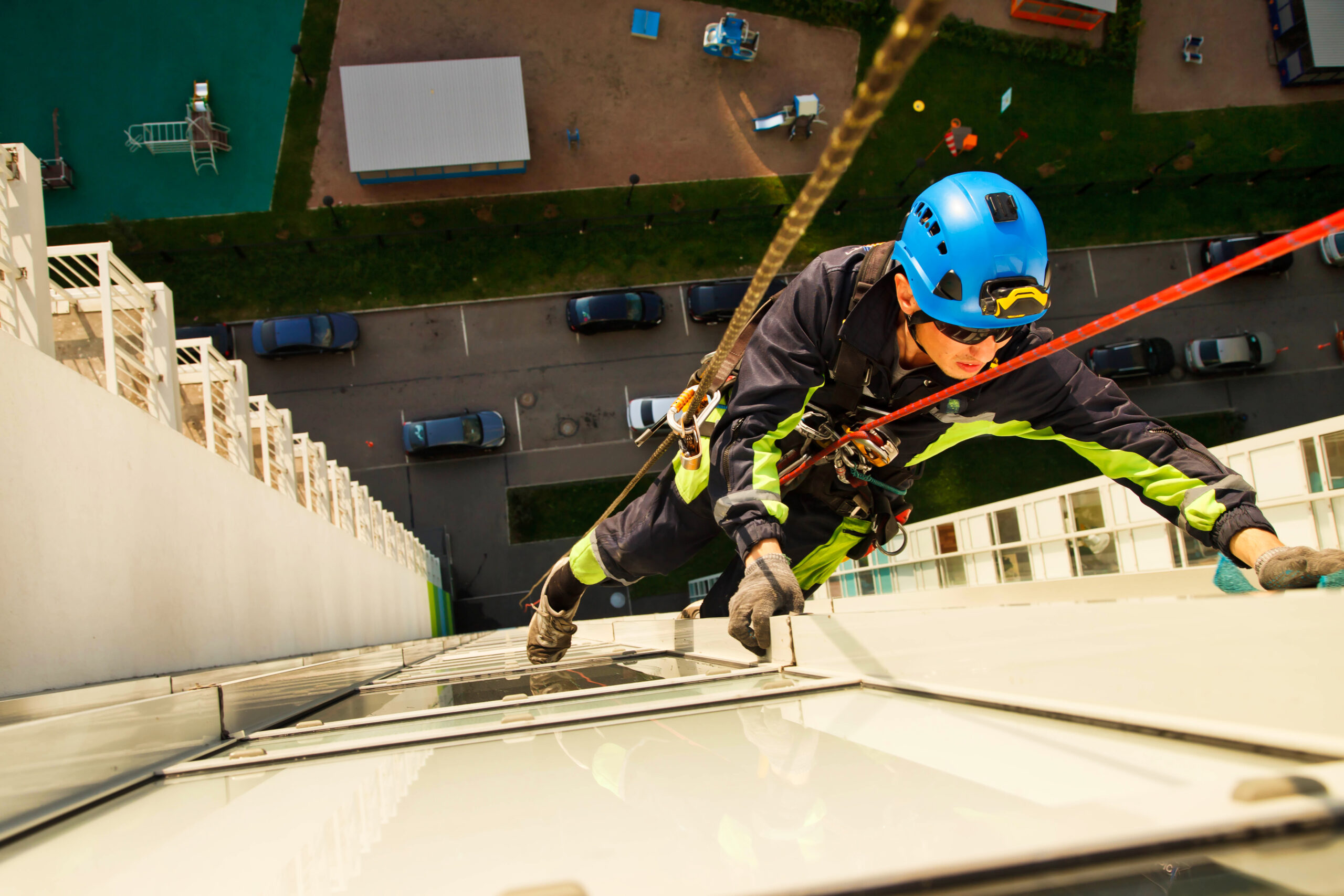
Glass curtain walls and glazed facades that define our urban skylines now endure conditions far beyond their original design parameters, making regular rope access inspections more critical than ever. Modern building envelopes face unprecedented challenges as extreme weather becomes increasingly common across the UK.
The Met Office confirms that Britain’s climate is shifting rapidly, with the past decade delivering record-breaking temperatures and severe weather events. This new reality demands a fundamental rethink of how we maintain and protect glazing systems through specialised abseil glazing maintenance and inspection programmes.
Extreme temperature fluctuations create thermal stress that overwhelms traditional glazing systems. During the 2022 heatwave, rope access technicians documented widespread failures across London’s high-rise district, revealing how glass expansion rates now exceed design tolerances.
Structural glazing adhesives break down under extreme thermal expansion, causing panels to shift by several millimetres. These movements compromise weatherproofing and structural integrity simultaneously. Tempered glass develops stress fractures that begin as minor edge chips but propagate across entire panels during heat events.
Aluminium frames expand beyond manufacturer specifications, particularly on south-facing facades where measurements show 40% greater expansion than anticipated. Professional abseil glazing teams can assess these critical movement zones safely and efficiently, identifying potential failures before they become catastrophic.
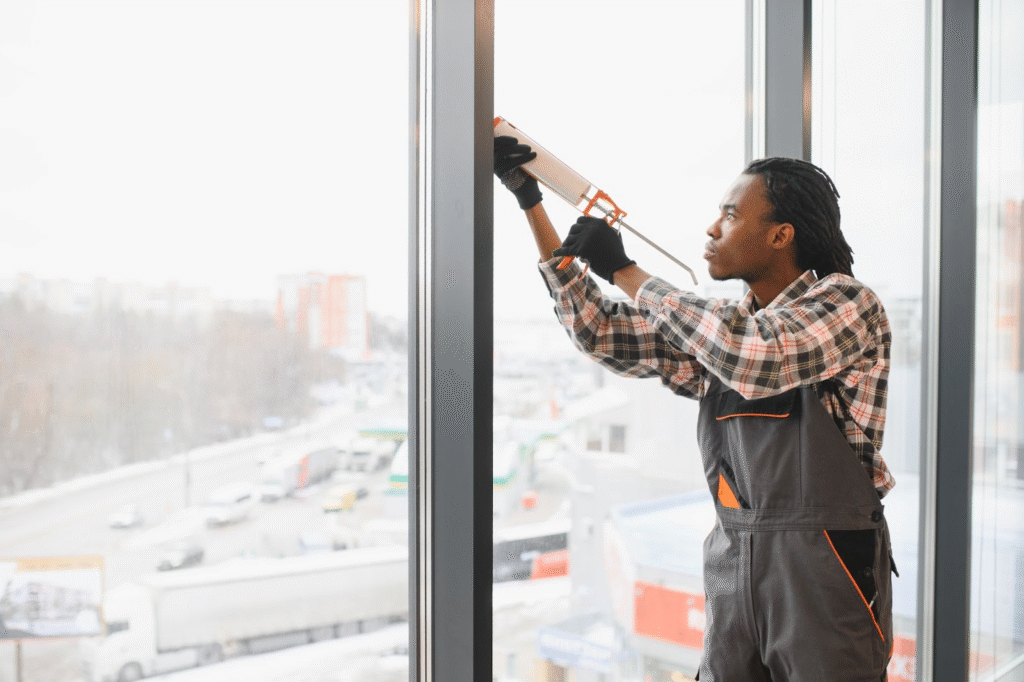
Weatherseals represent the most vulnerable components in any glazing system, yet they’re essential for building envelope performance. Climate extremes dramatically accelerate degradation rates, with traditional 25-year lifecycle sealants now requiring replacement within 15-18 years.
Intensified UV radiation during extended heatwaves breaks down polymer chains in sealant compounds. Extreme thermal cycling causes repeated expansion and contraction beyond design parameters, whilst increased ozone levels during heat events accelerate chemical degradation processes.
Rope access inspections enable detailed sealant assessment without costly scaffolding, allowing property managers to implement proactive replacement strategies based on actual condition rather than arbitrary timelines.
Storm intensity continues increasing, creating dynamic loading conditions that challenge existing glazing installations. Post-storm rope access inspections consistently reveal glazing unit deflection that stresses sealed edges, frame racking from asymmetric wind loads, and fastener stress in curtain wall systems.
Modern glazing codes haven’t adapted to evolving wind load requirements, leaving many buildings vulnerable to storm damage that insurance policies may not cover. Regular glazing inspections by qualified rope access technicians can identify these vulnerabilities before extreme weather events occur.
Rainfall events now deliver 20% greater intensity than historical averages, creating water pressure conditions that overwhelm standard drainage systems. Rope access inspection teams regularly document overwhelmed weep hole systems where drainage capacity is exceeded, causing water backup into glazing assemblies.
Pressure-driven water infiltration occurs through previously weather-tight seals when extreme wind-driven rain creates excessive pressure differentials. Rapid temperature changes cause vapour drive reversal, pushing moisture through building assemblies in unexpected directions and potentially creating condensation within glazing cavities.
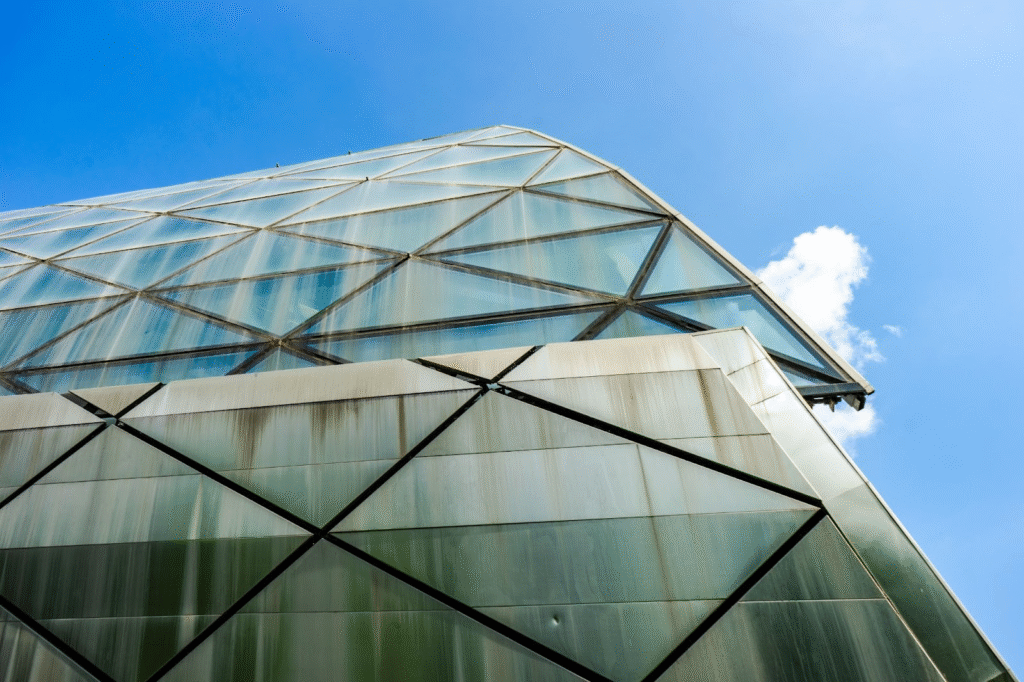
Traditional annual inspections no longer provide adequate protection against climate-related glazing failures. Enhanced inspection protocols now require bi-annual detailed assessments with additional post-event evaluations following extreme weather events.
Abseil glazing maintenance programmes offer cost-effective solutions for implementing these enhanced protocols. Rope access inspections enables efficient work without scaffolding costs or building disruption, whilst providing detailed condition assessments of hard-to-reach glazing elements.
Proactive sealant management strategies based on thermal history and UV exposure data prove more effective than reactive replacement approaches. Advanced sealant compounds designed specifically for extreme weather conditions demonstrate superior performance compared to traditional materials.
Climate adaptation protects asset values whilst reducing emergency repair costs. Buildings implementing proactive climate resilience strategies experience 60% fewer emergency repairs and maintain energy performance ratings more effectively than those using traditional maintenance approaches.
Professional rope access inspections provide the detailed condition data necessary for developing targeted maintenance strategies. Understanding specific building vulnerabilities enables property managers to prioritise resources effectively whilst protecting long-term glazing system performance.
Climate change impacts on glazing systems represent immediate challenges requiring urgent attention. Buildings thriving in this new environment have owners who recognised climate risks early and adapted maintenance strategies accordingly.
Comprehensive glazing inspections by certified rope access technicians provide essential baseline data for understanding building-specific vulnerabilities. This knowledge enables development of targeted maintenance programmes that protect glazing investments whilst ensuring continued building performance throughout changing climate conditions.
Protect your building’s glazing investment with professional climate resilience assessments from our IRATA-certified rope access teams. We provide comprehensive glazing condition surveys without scaffolding disruption or excessive costs. Contact us today to schedule your detailed glazing inspection and safeguard your property against climate change impacts.



GLRE © All Rights Reserved 2026