Statement leading to lead magnet.
Learn about the most common atrium glazing problems, from leaks to cracked glass, and how specialist contractors resolve them. Contact GLRE for a site survey.

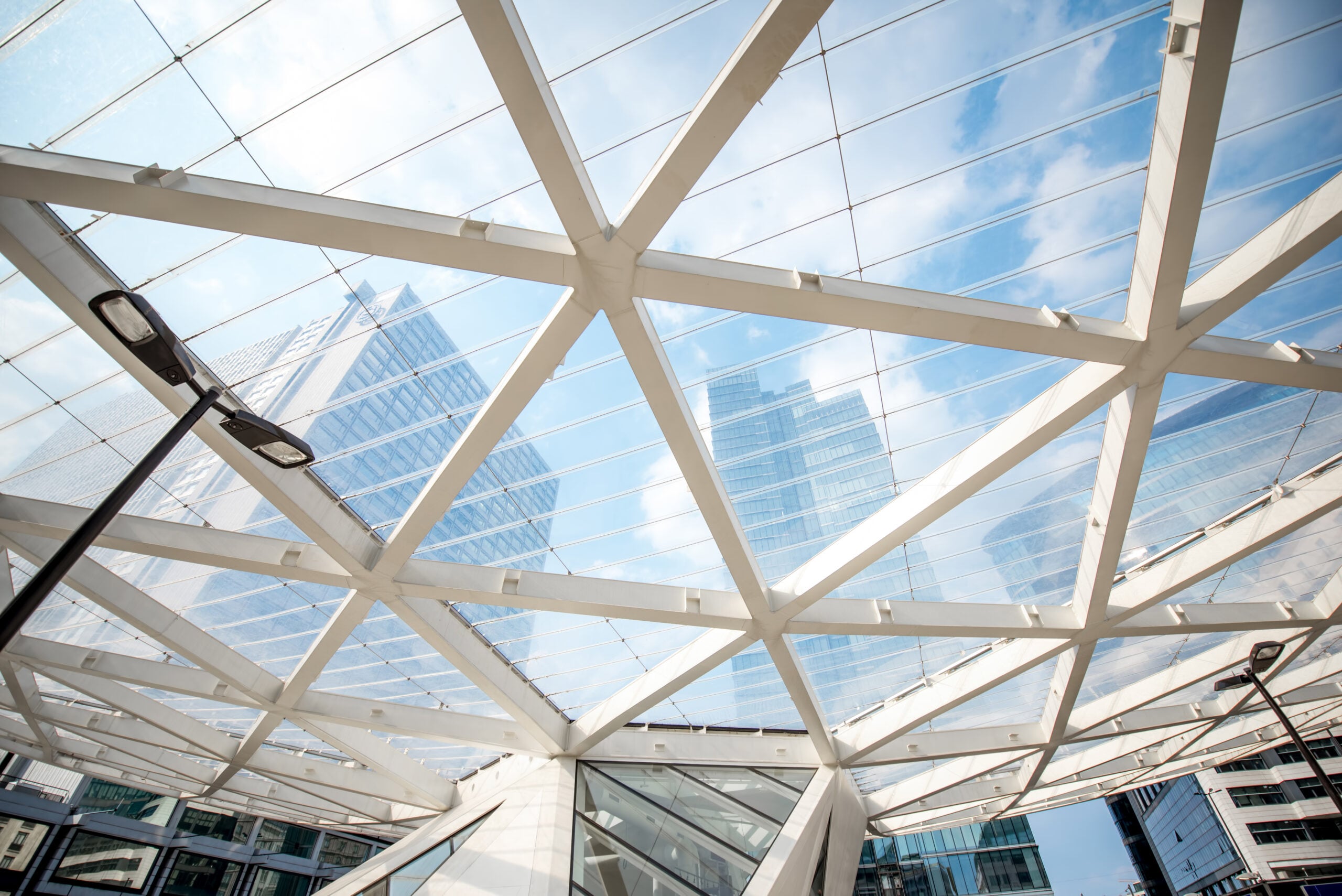
The most common problems affecting commercial atrium glazing repair are water ingress through failed sealant joints, cracked or broken glass panels, corroded framing, and condensation forming within sealed units. Resolving these issues requires a specialist approach because atrium glazing sits at height, often over occupied areas, and demands safe access planning, specialist glass-handling equipment, and qualified technicians before any repair work can begin.
A glazed atrium is an internal or semi-internal space enclosed by a glass roof and, in many cases, glass walls. Common in office buildings, shopping centres, hotels, hospitals, and transport hubs, atriums bring natural light deep into a building and create an open, impressive architectural centrepiece.
Because the glass is positioned overhead and often extends across a large plan area, atrium glazing is subject to continuous exposure to rainfall, temperature fluctuation, and UV degradation. This makes regular inspection and maintenance essential, not optional.
Glazed atriums can incorporate a range of systems including framed double-glazed units, structural silicone glazing, ETFE cushion systems, and patent glazing bars. Each system has its own maintenance requirements and failure modes.
The table below sets out the most frequently encountered problems in commercial atrium glazing repair, their typical causes, and the resolution approach used by specialist contractors.
| Common Problem | Typical Cause | Resolution Approach |
|---|---|---|
| Water ingress / leaking | Failed sealant joints, cracked glass, blocked drainage | Root-cause leak investigation, targeted sealant and glazing repairs |
| Cracked or broken glass panels | Impact, thermal stress, spontaneous toughened glass breakage | Like-for-like or upgraded glass replacement via rope access or MEWP |
| Condensation between double-glazed units | Failed edge seal allowing moisture entry | Replacement of the affected sealed unit |
| Corroded or failing framing | Age, water ingress, environmental exposure | Frame repair or replacement as part of a refurbishment programme |
| Algae and soiling on overhead glass | Lack of regular maintenance access | High-level cleaning followed by a planned maintenance programme |
| Loose or failed structural fixings | Age, overloading, original installation defects | Specialist inspection and structural re-fixing or system upgrade |
Water ingress is the most frequently reported problem in glazed atriums. Leaks rarely come from a single point of failure. Failed sealant joints, cracked glass panels, blocked drainage channels, and defective junctions between the glazing system and the surrounding building envelope can all contribute simultaneously.
Identifying and permanently resolving a leaking atrium requires a root-cause investigation rather than surface-level patching. A specialist contractor will map every entry point, trace the path of water through the structure, and carry out targeted repairs that address all contributory factors. This approach, rather than reactive patching of individual joints, is what allows long-term warranties to be provided against leak recurrence.
Glass panels in atriums can crack or break as a result of direct impact, thermal stress caused by extreme temperature differentials, or spontaneous breakage in toughened glass units. Spontaneous breakage in toughened glass is caused by nickel sulphide inclusions introduced during the manufacturing process; it is not a sign of poor installation or subsequent damage.
Where toughened glass has broken, the panel will hold together in a characteristic crumble pattern if laminated, but must be replaced promptly to maintain the weathertight integrity of the roof. Like-for-like replacement or an upgraded specification can be installed depending on the client’s requirements and the age of the existing system.
Further information on why glass breaks and what can be done to reduce risk is covered in GLRE’s guide to glass spontaneous breakage.
Silicone sealant joints in glazed atriums degrade over time as a result of UV exposure, thermal movement, and age. Once a joint fails, water can penetrate the glazing system and travel some distance from the original entry point before becoming visible inside the building. This makes visual identification of the leak source from the interior unreliable.
Sealant repair on an atrium requires working at height on the external or internal face of the glass. Rope access is frequently the most practical method, allowing technicians to reach all parts of the glazing system without erecting scaffolding over the atrium void.
Condensation forming between the panes of a double-glazed unit indicates that the edge seal has failed, allowing moist air to enter the cavity. Once the seal fails, the unit cannot be repaired and must be replaced. The replacement unit is installed in the existing frame, provided the frame itself is in acceptable condition.
Aluminium framing in older atrium systems can corrode, deform, or suffer from failed thermal breaks that reduce the energy performance of the installation. Where individual frame sections have failed, targeted replacement is often possible. Where the framing system is extensively degraded, a full refurbishment programme covering both glass and framing is likely to be more cost-effective than ongoing piecemeal repairs.

Atrium glazing sits overhead by definition, meaning all repair and replacement works require working at height above the atrium floor. In a busy commercial building, the atrium is often a live circulation or trading area that cannot be closed for extended periods.
Access methods used for atrium glazing repair include:
The access strategy is determined at the initial site survey stage and is costed as part of the works specification from the outset.
The decision between repair and replacement depends on the nature and scale of the defects, the age of the glazing system, and whether spare parts are still available for the existing installation.
Repair is typically the right course of action where:
A refurbishment or full replacement programme becomes the appropriate response where:
A condition survey by a specialist commercial glazing contractor is the most reliable way to establish which route is appropriate before committing to a programme of work.
Glass used in overhead glazing must comply with BS EN 12600, the UK standard for glazing impact performance. Overhead glazing in positions where breakage could result in glass falling on occupants must be specified as laminated safety glass so that broken panels remain in place rather than falling.
The Health and Safety at Work etc. Act 1974 and the Work at Height Regulations 2005 govern all work carried out on glazed atriums. Compliance requires that a competent person plans and supervises the works, that appropriate fall-prevention measures are in place, and that the correct personal protective equipment is used throughout.
The Work at Height Regulations 2005 require that all work at height is properly planned, appropriately supervised, and carried out by competent people. IRATA accreditation provides the recognised framework for rope access works in compliance with these requirements.
A specialist commercial glazing contractor follows a structured process to ensure that all atrium repair works are carried out safely, to specification, and with minimal disruption to building occupants.
GLRE has nearly 30 years of experience carrying out high-level commercial glazing repairs across the UK, including atrium glazing repair and leak resolution at some of the country’s most well-known buildings. The team holds CHAS Elite, Constructionline Platinum, ISO 9001, ISO 14001, Safecontractor, and Acclaim accreditations.
GLRE is one of a small number of commercial glazing contractors able to provide insurance-backed guarantees on leak repair projects, reflecting the confidence the team has in its permanent, root-cause approach to water ingress resolution.
GLRE’s IRATA-trained rope access technicians hold all necessary qualifications in HS&E law and practice, including NEBOSH, IOSH, and trade-specific certificates, and operate under the oversight of Level 3 supervisors in accordance with IRATA international guidelines.
If your commercial atrium glazing has developed a leak or requires inspection, repair, or replacement, contact GLRE’s technical team to arrange a site survey and receive a fully specified, permanent repair solution.



GLRE © All Rights Reserved 2026