Statement leading to lead magnet.

GLRE explains what cladding repair via rope access involves, when to act on facade defects, and what the process looks like. Get a free site survey today.

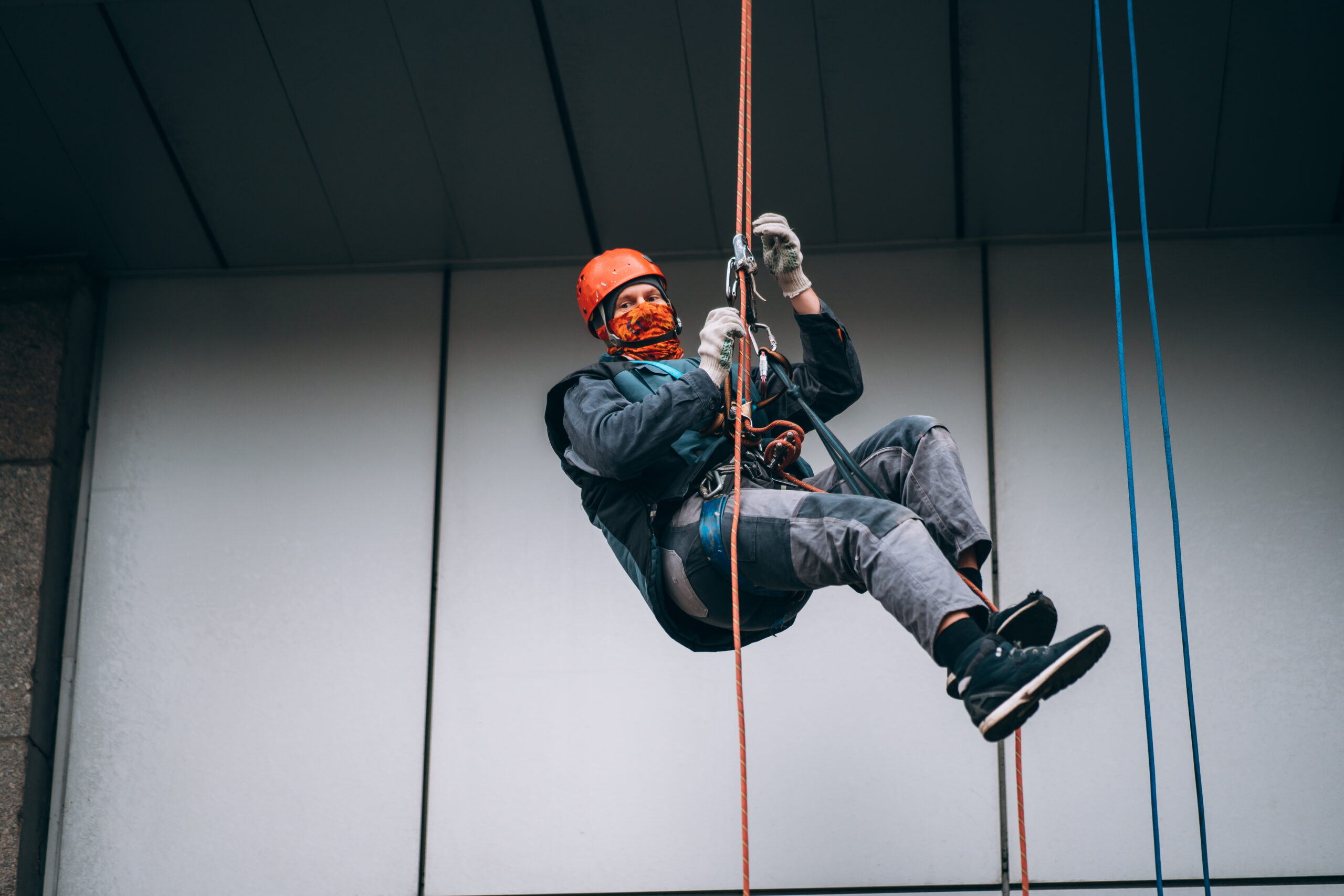
Cladding repair via rope access involves IRATA-qualified technicians accessing the external facade of a building using industrial rope systems to inspect, repair, or replace damaged cladding panels, joints, and fixings — without the need for scaffolding. It is used on commercial and industrial buildings where defects are identified at height and conventional access methods are impractical, too slow, or too costly.
Cladding is the external skin of a building. It provides weatherproofing, thermal insulation, and structural support to the facade, and in many modern commercial buildings it is the primary barrier between the interior and the external environment. When cladding fails, the consequences range from water ingress and internal damage to structural concerns and, in some cases, safety risks.
Prompt cladding repair limits the progression of damage. A failed joint sealant, for example, can allow sustained water ingress that leads to deterioration of insulation, sub-frame corrosion, and eventual panel movement. Addressing defects early is generally far less costly than allowing them to develop into larger remediation projects.
Rope access is particularly well suited to cladding repair because it allows technicians to work at any point on a facade without the logistics and lead times involved in erecting scaffolding. Our building envelope repairs service covers the full range of facade and cladding works we undertake.
Rope access technicians can carry out a wide range of cladding repair and maintenance tasks on the external building envelope. Common defect types that rope access is used to address are set out below.
| Defect Type | Description |
| Panel cracking or fracture | Impact damage, thermal movement, or material fatigue causing visible cracks |
| Joint sealant failure | Deteriorated mastic allowing water ingress between panels or at fixing points |
| Corrosion at fixings | Rust or galvanic corrosion at metal fixings, brackets, or sub-frame components |
| Panel delamination | Separation of composite panel layers, often visible as surface bubbling or lifting |
| Impact or vandal damage | Physical damage to lower-level panels requiring patch or full panel replacement |
| Fading or surface degradation | Loss of surface coating or finish, affecting weatherproofing and appearance |
In addition to repair works, rope access is frequently used for cladding inspections, particularly as part of post-winter building envelope surveys or planned maintenance programmes. Our post on spring building envelope surveys outlines the value of early-season inspection.
There is no single threshold that determines when cladding repair becomes urgent, as the right timing depends on the nature and location of the defect. However, the following situations generally warrant prompt action:
For defects identified following extreme weather, our emergency make-safe service can be mobilised rapidly to secure the facade and prevent further damage or risk to people below.
A rope access cladding repair project follows a structured sequence from initial assessment through to completion.
A GLRE project manager or IRATA Level 3 supervisor carries out a site survey to assess the extent of defects, identify suitable anchor points for rope systems, and scope the works required. For larger or more complex facades, a detailed building envelope condition report may be produced, documenting all observed defects and prioritising remediation.
Our rope access site survey guide explains what happens at this stage in more detail.
The Level 3 supervisor prepares a site-specific risk assessment and method statement (RAMS) covering rig design, anchor point selection, pedestrian management, and any specific hazards such as proximity to public areas or live services. This is completed before any rope access work begins.
Working lines and safety lines are rigged from suitable anchor points, typically eyebolts or structural fixings at roof level. All rigging is checked and signed off by the Level 3 supervisor before technicians descend. If eyebolts are not present or require testing, GLRE can carry out installation and load testing as part of the same project.
IRATA-qualified technicians carry out the specified cladding repairs from rope. Depending on the nature of the defect, this may involve removing and replacing individual panels, cutting out and reapplying joint sealants, treating corroded fixings, or applying surface coatings. All materials used are specified to be compatible with the existing cladding system.
On completion, GLRE provides photographic records of the works and, where required, inspection certificates or compliance documentation. This is particularly relevant for clients managing planned maintenance programmes or responding to insurance requirements.
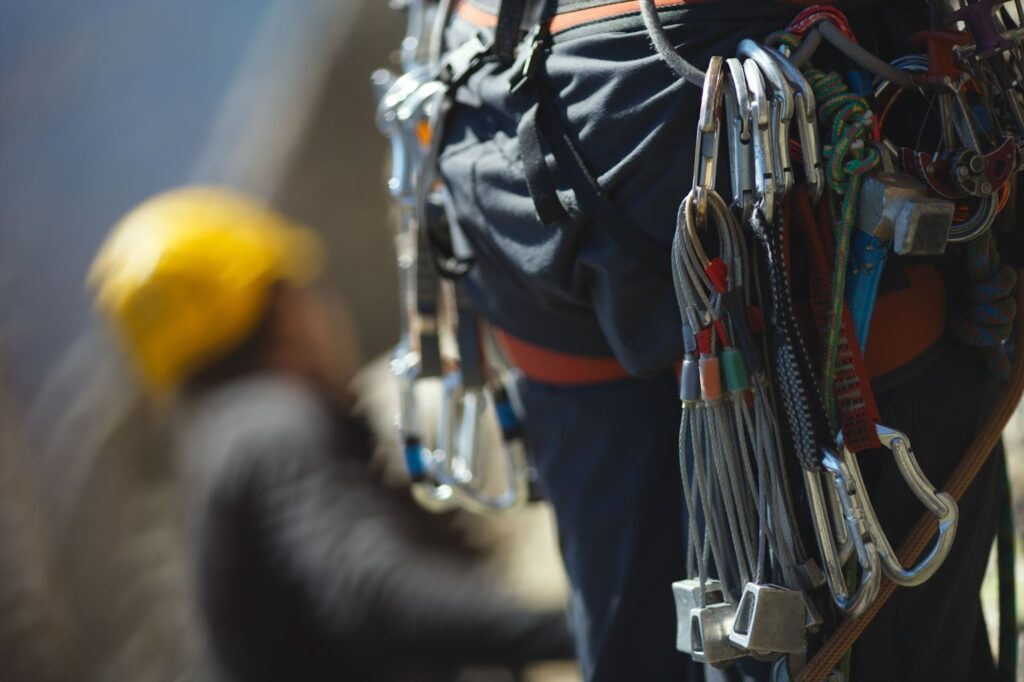
Rope access is compatible with the vast majority of commercial cladding systems, including:
The access method is determined by the geometry of the building and the nature of the works, not by the cladding type itself. Rope access is particularly effective where panels are set at varying heights or depths, or where the facade includes overhangs, reveals, or complex junction details that would be difficult to reach from a standard scaffold lift.
For cladding repair on buildings of five storeys or more, rope access typically offers a number of practical advantages over scaffolding:
For context on how rope access works and why it is often the preferred method for high-level building maintenance, see our post on why rope access is best for high-level glazing, which covers the access methodology in detail.
When commissioning rope access cladding repair, the contractor’s qualifications directly affect both the quality and safety of the works. Key accreditations to look for include:
GLRE holds IRATA membership, CHAS Elite accreditation, SafeContractor approval, ISO 9001:2015 certification, and Platinum Constructionline membership. Our full list of accreditations is available on the about page.
GLRE operates nationwide, with offices in Manchester, Birmingham, London, Newcastle, and Glasgow. Our rope access teams are available for cladding repair and building envelope works across the UK, including major cities throughout the North West, the Midlands, and the South East.
For specific coverage information, see our service area pages for rope access Manchester, rope access Leeds, and rope access Birmingham.
To arrange a cladding inspection or discuss a repair project, contact GLRE today for a free site survey with one of our IRATA-qualified supervisors.


GLRE © All Rights Reserved 2026