Statement leading to lead magnet.

Technical differences between these commercial glazing systems helps decision-makers select the solution that genuinely meets their project requirements.


When specifying commercial glazing for a new development or planning a major refurbishment, building owners and facilities managers face a fundamental decision about which glazing system best serves their property. The choice between curtain wall systems and traditional window wall installations significantly impacts not just the building’s appearance, but also its structural requirements, energy performance, maintenance needs, and long-term costs. Understanding the technical differences between these commercial glazing systems helps decision-makers select the solution that genuinely meets their project requirements rather than simply following architectural trends.
Commercial glazing encompasses various systems designed to create weather-tight, energy-efficient building envelopes whilst maximising natural light and views. Unlike residential glazing, commercial systems must accommodate larger spans, higher wind loads, thermal movement across multiple storeys, and significantly more demanding performance specifications. The two most common approaches to multi-storey glazed facades are curtain wall systems and window wall systems, each with distinct structural principles that determine their appropriate applications.
The fundamental distinction between these commercial glazing systems lies in how they attach to the building structure and where they carry their loads. This structural relationship affects everything from installation methodology to long-term performance characteristics, making it essential to understand these differences before committing to either approach. Both systems create non-load-bearing exterior walls, meaning they support only their own weight and resist wind forces without contributing to the building’s structural frame. However, their relationship with that frame differs significantly.
A curtain wall system literally hangs like a curtain from the building structure, typically attached to the outer edge or face of the floor slabs. These commercial glazing systems span continuously from floor to floor, or even across multiple storeys, creating an uninterrupted glass facade that sits proud of the building’s structural frame. The system carries its own weight through vertical mullions that transfer loads to anchor points at each floor level, whilst accommodating building movement, thermal expansion, and wind loads through engineered connections.
Curtain wall systems come in two primary construction methods, each with distinct characteristics:
The continuous nature of curtain wall glazing creates several performance advantages for commercial buildings. Because the system spans from slab edge to slab edge without interruption, it naturally provides superior protection against water penetration and air infiltration compared to systems with multiple horizontal joints. The engineered stack joints between panels accommodate differential movement between floors whilst maintaining weather tightness, making curtain walls particularly suitable for tall buildings where thermal expansion and structural deflection become significant concerns.
Curtain wall systems excel in high-rise commercial applications where their structural advantages justify the higher initial investment. Office towers, hotels, and institutional buildings frequently specify curtain walls to achieve the seamless glass facades that define contemporary commercial architecture. The system’s ability to incorporate complex geometries, integrate sun shading devices, accommodate building maintenance units, and deliver exceptional thermal performance makes it the preferred choice for architecturally significant projects where performance and aesthetics justify premium costs.
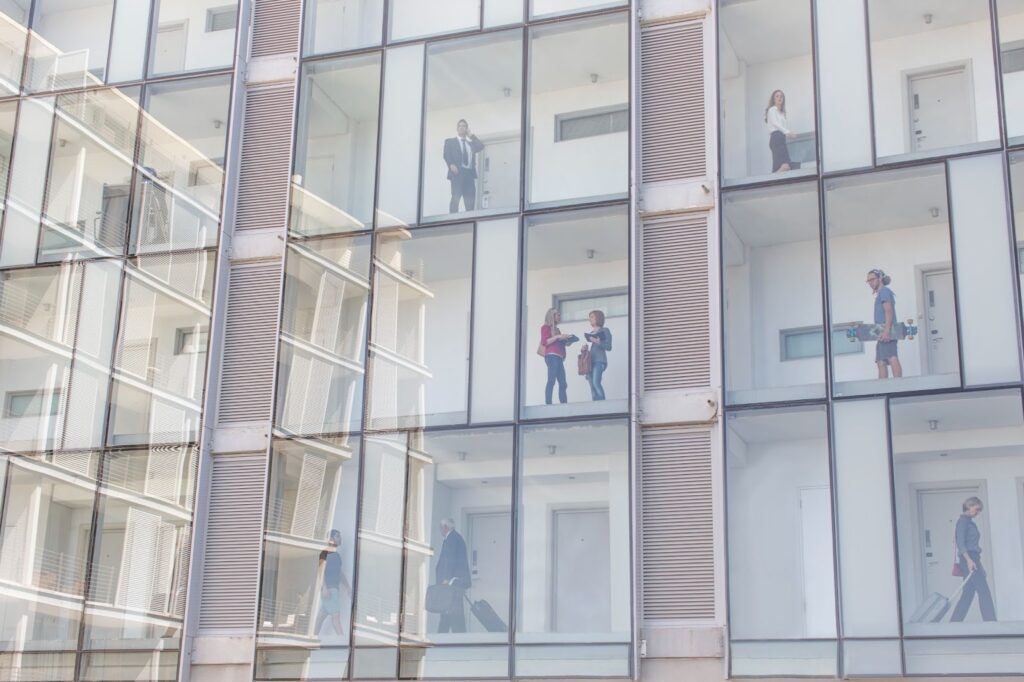
Window wall systems take a fundamentally different approach to commercial glazing by installing between floor slabs rather than hanging from them. These pre-fabricated glazing units sit within the structural opening created by each floor, anchored at the sill and head to create compartmentalised zones of glazing that align with the building’s floor plates. The system relies on the floor structure above and below to support its weight, with movement accommodation occurring within each storey height rather than across multiple floors.
The installation methodology for window walls differs significantly from curtain wall approaches:
This floor-by-floor installation approach makes window walls particularly cost-effective for projects where budget constraints preclude curtain wall systems. The simplified structural requirements mean reduced engineering complexity, whilst the interior installation methodology eliminates the need for external lifting equipment after the building structure is complete. These factors combine to make window wall systems attractive for residential towers, hotels, and smaller commercial buildings where the aesthetic differences between systems prove less critical than capital cost considerations.
Window walls deliver several practical advantages that appeal to developers and building managers. The system’s integration with floor slabs simplifies coordination with interior finishes, as sills naturally align with floor levels and heads correspond to ceiling zones. This relationship makes window walls easier to detail with HVAC systems, particularly when individual air conditioning units require integration with the facade. The compartmentalised nature of the system also provides inherent fire-stopping between floors, as each unit terminates at the structural slab rather than creating continuous vertical cavities.
The different structural approaches of curtain wall and window wall systems create distinct performance characteristics that matter greatly in commercial glazing applications. Understanding these differences helps building owners make informed decisions about which system genuinely serves their project requirements.
Curtain wall systems demonstrate superior structural performance in several critical areas. The continuous mullion system that spans multiple floors provides exceptional resistance to wind loads and seismic activity, making curtain walls the only practical choice for buildings exceeding 15 to 20 storeys. The engineered stack joints between unitised panels accommodate significant building movement whilst maintaining weather-tight performance, and the system’s inherent redundancy means localised failures rarely compromise overall building envelope integrity. These structural advantages become increasingly important as building height increases and wind loads intensify.
Window wall systems work within more constrained structural parameters. Because each unit spans only a single storey and relies on floor-to-floor dimensions for support, window walls become impractical for very tall buildings where differential movement and thermal expansion exceed the system’s accommodation capabilities. The horizontal joints at each floor level create potential weak points for air and water infiltration, requiring careful detailing and installation to achieve performance comparable to curtain wall systems. However, for buildings up to 10 to 12 storeys, properly specified window walls deliver adequate structural performance at significantly reduced cost.
The thermal performance differences between systems often prove more nuanced than structural considerations. Both curtain wall and window wall systems can achieve excellent energy efficiency when properly specified with thermally broken frames, high-performance glazing units, and appropriate gasket systems. However, curtain walls typically offer slight advantages in this area:
The practical realities of installing and maintaining commercial glazing systems significantly impact total ownership costs beyond the initial capital expenditure. These operational considerations often prove as important as structural or thermal performance specifications when evaluating which system serves a particular project best.
Curtain wall installation requires careful coordination and specialised equipment. Stick-built systems need substantial scaffolding or suspended platforms to enable field assembly at height, whilst unitised systems demand mobile cranes or building hoists to position large pre-fabricated panels. Installation proceeds from the exterior, which can create scheduling challenges in dense urban sites with limited laydown space or crane access. However, unitised curtain wall installation typically proceeds more rapidly than stick-built approaches, potentially reducing overall construction timelines despite the logistics complexity. The factory-controlled assembly environment for unitised systems also delivers more consistent quality than field glazing.
Window wall installation offers distinct advantages in construction logistics and worker safety. Because installation occurs from inside the building after the structure is complete, the process avoids many weather-related delays that affect exterior curtain wall work. Workers remain protected within the building envelope, and the relatively lightweight units require less heavy lifting equipment than large unitised curtain wall panels. This interior installation methodology particularly benefits projects in challenging urban environments or on sites where crane access proves problematic. The trade-off comes in the system’s exposure to the elements until installation completes, requiring careful protection of the structural opening.
Long-term maintenance requirements differ substantially between systems in ways that affect lifecycle costs. Curtain wall systems generally require less frequent maintenance interventions due to their engineered weather-tightness and high-quality factory assembly. The continuous mullion system means fewer potential leak points, and the structural independence from floor slabs eliminates the slab-edge details that often cause maintenance issues in window wall installations. However, when curtain wall maintenance becomes necessary, the scale of work tends to be larger as interventions typically address systematic issues affecting multiple panels rather than isolated problems with individual units.
Rope access techniques have transformed high-level commercial glazing maintenance for both systems. IRATA-qualified technicians can inspect, clean, and repair glazing at any height without the disruption and expense of full scaffolding erection. For curtain walls, rope access enables efficient gasket replacement, panel repairs, and weatherproofing interventions across entire facades. Window wall maintenance similarly benefits from rope access capabilities, particularly for addressing the floor-by-floor sealant joints that require periodic renewal to maintain weather-tight performance.
The financial implications of curtain wall versus window wall systems extend well beyond the initial installation costs that often dominate procurement discussions. A comprehensive cost analysis must consider capital expenditure, installation efficiency, energy performance impacts, maintenance requirements, and the potential for premature replacement if systems prove inadequate for their application.
Initial capital costs for curtain wall systems typically exceed window wall alternatives by 25% to 60%, depending on specification complexity and project scale. This premium reflects the more sophisticated engineering, higher-quality materials, and specialised installation requirements that curtain walls demand. Unitised curtain wall systems command the highest prices due to their factory fabrication and complex logistics, whilst stick-built curtain walls occupy a middle ground between unitised systems and window walls. For projects where budget constraints prove decisive, these capital cost differences often eliminate curtain walls from consideration regardless of their performance advantages.
However, capital cost comparisons reveal only part of the financial picture. Curtain wall systems deliver measurable value through several mechanisms:
The energy performance differences between well-specified curtain wall and window wall systems often prove modest in temperate UK climates, making the thermal efficiency argument less compelling than in more extreme environments. Similarly, the aesthetic distinctions that seem paramount during design phases may matter less to tenants than functional considerations like natural light quality, views, and acoustic performance. Building owners should evaluate these factors based on their specific market positioning rather than assuming curtain wall systems automatically justify their cost premium.
For commercial glazing projects where budget permits either approach, the decision typically hinges on building height, architectural intent, and long-term ownership plans. Buildings exceeding 12 storeys generally require curtain wall systems for structural reasons, making the cost comparison academic. For mid-rise developments where either system proves structurally viable, owners planning long-term holds may justify curtain wall costs through reduced maintenance and superior performance, whilst developers seeking near-term exits often optimise for lower capital costs regardless of lifecycle considerations.
Selecting between curtain wall and window wall systems requires careful evaluation of multiple factors specific to each project. No single system proves universally superior across all applications, making it essential to match the commercial glazing approach to the building’s actual requirements rather than defaulting to industry trends or prestige specifications that may not deliver commensurate value.
Building height remains the primary determining factor for most projects. Structures exceeding 15 storeys typically require curtain wall systems to handle wind loads and building movement, making the decision straightforward. For buildings between 8 and 15 storeys, either system may prove structurally adequate, shifting the decision to aesthetic, performance, and cost considerations. Below 8 storeys, window wall systems often deliver the best value unless specific architectural requirements demand curtain wall aesthetics or performance.
The building’s intended use and tenant requirements significantly influence appropriate system selection:
Site conditions and project logistics also constrain viable options. Urban sites with limited crane access may favour window wall systems for their interior installation methodology. Projects in exposed coastal or hilltop locations may require curtain wall weather performance regardless of cost implications. Phased construction schedules might benefit from the compartmentalised nature of window walls, whilst fast-track programmes could justify unitised curtain walls despite their higher costs.
The client’s asset management strategy provides crucial context for system selection. Sophisticated owners with professional asset management teams and long-term holding periods often specify curtain walls for their superior lifecycle performance and reduced maintenance requirements. Developers focused on construction cost management and near-term dispositions typically optimise for lower capital expenditure, making window walls more attractive. Build-to-suit projects should align glazing system selection with the occupier’s specific performance requirements and aesthetic expectations rather than generic specifications.
Planning a commercial glazing project and unsure which system serves your building best? GLRE Manchester provides independent advice on curtain wall and window wall systems based on 30 years of experience with commercial glazing throughout the UK.
Our IRATA-qualified rope access team maintains and repairs both system types across office towers, residential developments, hotels, and institutional buildings. Contact our technical team on 0161 850 0605 or email info@glre.co.uk to discuss your project requirements.
Whether you need expert guidance on system selection for new construction or specialist maintenance for existing commercial glazing, we deliver solutions that balance performance, aesthetics, and lifecycle costs.



GLRE © All Rights Reserved 2026